Chomeiji Sakuramochi Yamamotoya
長命寺桜もち 山本や · Chomeiji Sakuramochi Yamamotoya
- Ward
- Sumida
- Price
- ¥250~600
- Hours
- 08:30-18:00
- Closed
- Mon (may change)
- Getting there
- Tobu Hikifune Stn walk 9 min / Tokyo Skytree Stn walk 15 min
- Founded
- 1717
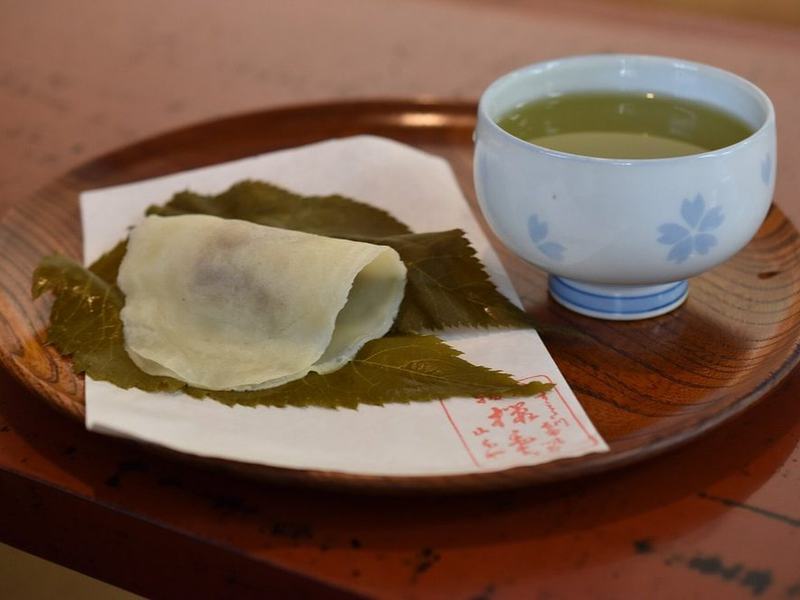
- Two or three large cherry leaves wrap the sweet completely
- Founded in 1717
- With no preservatives, the day it is made is the day it must be eaten
We do not republish copyrighted photographs. Use the links below to see the actual venue.
Obvious to locals, invisible to visitors
There is a simple reason guidebooks leave this out: to the people who live here it is too obvious to be worth explaining.
Two or three large cherry leaves wrap the sweet completely. They are there to lend fragrance and keep the mochi from drying, not to be eaten, and the shop recommends peeling them off. They are big and firm enough that eating all three is unreasonable, though some keep one for the scent and texture.
Founded in 1717. The founder was a gatekeeper at the temple here, worn down by sweeping fallen cherry leaves each spring, and tried pickling those leaves in salt and wrapping them around mochi to sell. It was born from a nuisance, not an ambition — and it became the prototype of the Kanto-style sakura-mochi.
With no preservatives, the day it is made is the day it must be eaten. It does not travel as a gift; buying and eating it the same day is the premise. Daily output is limited too, and in cherry season pre-orders alone can account for the entire day's stock. At peak times there are days when you cannot eat in.
A dango shop from the Keio era stands within sight of here, and doing both is the standard Mukojima route. Its dango come loose rather than on skewers, in three kinds: red bean, white bean and miso. Add a kusa-mochi house and you have the 'three great sweets of Mukojima', all within walking distance.
What it is
Sumida is a ward where artisan workshops survive under Skytree. Nicotine-stained wallpaper mingles with hand-dripped coffee — a smell no one could recreate deliberately. A hot towel and water come first. After that, not rushing is the unwritten rule. Around two in the afternoon, once the lunch peak has passed, is the quietest window. Keep the receipt — it makes the name easy to look up later, since many signs are kanji-only. One stop off the tourist line and this is what appears — that is the nature of this city.
What to order
Why locals keep coming
Nobody hurries you along — a kind of slack that has vanished from the chains. The menu is simple enough that you cannot really go wrong — everything on it has been made for years.