TOKYO 23
Local Know-How

Obvious to locals, invisible to visitors

There is a simple reason guidebooks leave this out: to the people who live here it is too obvious to be worth explaining.

261Shop-specific notes
74Verified venues
5Categories

How to order

60

The baked apple (¥700) is served October to May only

The baked apple (¥700) is served October to May only — and on weekdays not before 2pm, weekends from 11am. It rivals the curry in fame, but miss the window and you miss it.

Sumatra Curry Kyoeido Chiyoda
Locals know: the main shop handles drinks and light toast

Locals know: the main shop handles drinks and light toast, while pasta and pizza toast are served next door at Sabouru 2. Hungry? Go straight to number two.

Sabouru Chiyoda

It flies a kissaten sign yet is famous for bottled beers from around the world

It flies a kissaten sign yet is famous for bottled beers from around the world. Coffee drinkers and afternoon drinkers share the same room.

Milonga Nueva Chiyoda

Before the curry arrives, you get boiled potato with butter

Before the curry arrives, you get boiled potato with butter — free, and some regulars come mainly for it. Eating the potato while you wait is simply how this place works.

Bondy Jimbocho Chiyoda

Almost everyone eats the red napolitan

Almost everyone eats the red napolitan, so it goes unnoticed, but the menu also lists 'Italian' — the same noodles seasoned with salt rather than ketchup, an entirely different face of the dish. Order it on a second visit and you see the kitchen's range.

Sabouru 2 Chiyoda

Yabu-style soba is milled with the green husk, giving its pale colour

Yabu-style soba is milled with the green husk, giving its pale colour. The dipping sauce is sharply Edo-style — dip only the bottom third, or salt drowns the buckwheat.

Kanda Yabu Soba Chiyoda

When you finish, ask for sobayu — the starchy water the noodles were boiled in

When you finish, ask for sobayu — the starchy water the noodles were boiled in. Poured into your leftover dipping sauce, it is the Edo-era way to close the meal.

Kanda Yabu Soba Chiyoda

It is not only for professionals

It is not only for professionals — the ground floor is full of stationery and gifts, with serious art materials on the upper floors and a gallery cafe above that.

Bumpodo Chiyoda

Gift boxes are what catch the eye, but this is a shop that sells by weight from 100g

Gift boxes are what catch the eye, but this is a shop that sells by weight from 100g. Some twenty varieties sit in the case, so take a little of whatever interests you. The old style of selling from a raised tatami counter survives, so you can ask the owner which goes with rice and which with drink. Cash only.

Tenyasu Honten Chuo

You do not pour it all at once

You do not pour it all at once. Fry the solids first, gather them into a doughnut-shaped dyke, ladle the liquid into the middle a little at a time, then mix and spread once it bubbles. Skip the order and the dyke collapses across the whole griddle.

Tsukishima Monja Street Chuo

Press the thinned batter onto the iron with the small spatula and let it scorch

Press the thinned batter onto the iron with the small spatula and let it scorch — the crust is the whole point. Hold the spatula almost flat to the griddle for an even one, and wait rather than rush.

Tsukishima Monja Street Chuo

The noodles are white because only the core of the buckwheat grain is used

The noodles are white because only the core of the buckwheat grain is used. This is the sarashina lineage, and this house is credited with refining that flour into something close to its modern form. The menu also carries ordinary darker soba and a thick-cut version milled with the husk — ordering the white alongside one other is how you come to understand the place.

Sarashina Horii Minato

The house infusion regulars always order

The house infusion regulars always order. Tourists reach for the mojito; the Japanese drinker beside you is probably having this.

Albatross Omoide Yokocho Shinjuku

You order and pay at the register at the back and take your tray from there

You order and pay at the register at the back and take your tray from there — pure self-service. The menu covers the wall and runs long. Start deliberating when your turn comes and the line jams behind you; deciding while you queue is the rhythm here.

Beer & Cafe BERG Shinjuku

The name says beer and cafe, and both are the draw

The name says beer and cafe, and both are the draw. The sausages come from a maker who has taken gold at international competitions. Coffee from around ¥220 and morning sets from ¥439 make it startlingly cheap for Shinjuku.

Beer & Cafe BERG Shinjuku

The menu spells out the order

The menu spells out the order: first the broth alone, then spring onion, then tenkasu, then shichimi, and ginger last. Follow it and one bowl changes flavour four times. The tenkasu here is so un-greasy that some people eat it on its own.

Nezu Kamachiku Bunkyo

For zaru udon you can choose thick or thin noodles

For zaru udon you can choose thick or thin noodles. The thin ones are rolled out repeatedly after you order, so they take longer — and come out considerably springier.

Nezu Kamachiku Bunkyo

They coin the term menzenshu — the drink you have before the noodles

They coin the term menzenshu — the drink you have before the noodles. The sake list rotates fortnightly so even regulars find something new, and there is a proper range of snacks to drink alongside.

Nezu Kamachiku Bunkyo

When the pot arrives, pile on the spring onion without restraint

When the pot arrives, pile on the spring onion without restraint — locals bury the pan until it is invisible. Add sansho pepper too.

Komagata Dozeu Taito

A shot of Denki Bran neat, immediately chased with draft beer

A shot of Denki Bran neat, immediately chased with draft beer. The custom started among customers and the bar now advertises it on posters — hence the forest of glasses on every table.

Kamiya Bar Taito

Since 1942 this bakery has made exactly two things: a square loaf and rolls

Since 1942 this bakery has made exactly two things: a square loaf and rolls. Nothing else. Holding that line for eighty years is the whole identity.

Pelican Bakery Taito

Evening sukiyaki courses run into five figures

Evening sukiyaki courses run into five figures, but at lunch some branches serve twenty portions a day of things like the Meiji sukiyaki bowl for around ¥2,000 — usually gone soon after opening.

Imahan Honten Taito

The tempura soba arrives with two prawns so large they hang over the bowl

The tempura soba arrives with two prawns so large they hang over the bowl. Fried in sesame oil for lightness, each is peeled and its tendons snapped in four places so it fries straight. The shop reportedly fries close to a thousand a day.

Owariya Asakusa Taito

The standard tempura soba uses kuma prawns; the 'jo' version uses kuruma prawns

The standard tempura soba uses kuma prawns; the 'jo' version uses kuruma prawns. That is what the price gap buys — and regulars choose accordingly.

Owariya Asakusa Taito

Advice straight from the association chairman

Advice straight from the association chairman: prices sit at round numbers, so haggling item by item gets nowhere. Bundle instead — 'these three for five thousand' — because the shop would rather sell one person a lot.

Ameyoko Shopping Street Taito

Founded 1880 and defined by an unusually sweet warishita

Founded 1880 and defined by an unusually sweet warishita — almost too sweet to drink on its own, yet exactly right once beef cooks in it. Plenty of regulars prefer it to the better-known Imahan for that reason.

Chinya Taito

If the main-floor sukiyaki feels like too much

If the main-floor sukiyaki feels like too much, the basement sister shop is a counter-only steak place with far cheaper lunch sets — open 11:30 to 16:00 only.

Chinya Taito

Order the stew here and you order garlic toast with it

Order the stew here and you order garlic toast with it — that is simply how it is done, so you can dip the bread in the sauce left at the end. The third-generation owner started the pairing and it has hardened into house practice, with many tables ordering one per person. The stew comes with or without egg.

Yamariki Honkan Koto

There are two dishes under one name

There are two dishes under one name. The original bukkake is the fisherman's version — clams and onion simmered in miso, poured over rice. The takikomi style, rice cooked in clam stock, came later so carpenters could carry it as a packed lunch.

Fukagawa-meshi Koto

The famous croquette is not one shop's product but a street-wide brand

The famous croquette is not one shop's product but a street-wide brand — around twenty butchers, delis and restaurants each make their own. Walk the 1.3km comparing them. Some are odd, like the oden-flavoured one.

Togoshi Ginza Shotengai Shinagawa

The skewer goes in only for frying and is pulled out before plating

The skewer goes in only for frying and is pulled out before plating. Inside is pork with spring onion, which turns sweet in the fryer — plenty of regulars order this over the loin or fillet.

Tonki Meguro Meguro

Here the winged gyoza is written as 'guotie'

Here the winged gyoza is written as 'guotie'. Some shops just call it yaki-gyoza, which confuses people, but they are the same thing. The three shops have long kept the price of these grilled dumplings at a similar level. The main shop is small, so if the queue is long, the annex a few minutes' walk away has far more seating.

Nihao Honten Ota

Every ground-floor seat faces the towering speaker

Every ground-floor seat faces the towering speaker. For the full effect, tell a staff member and take the front row upstairs. The left and right speakers are deliberately different sizes, calculated for resolution.

Meikyoku Kissa Lion Shibuya

The rice is heaped into a peak because the previous owner loved mountains

The rice is heaped into a peak because the previous owner loved mountains — locals call it the Everest serve. The white streak on the sauce is milk, standing in for snowmelt. You eat by collapsing the foot of the mountain into the curry.

Murugi Shibuya

The pickles come as red ginger mixed into fukujinzuke

The pickles come as red ginger mixed into fukujinzuke, plus a yellow tsubozuke on the side — regulars insist the combination is part of the dish. Order it spicy and the ketchup on the egg is swapped for chilli oil.

Murugi Shibuya

Because several regional chicken breeds are kept on hand

Because several regional chicken breeds are kept on hand, you can order the same cut from different origins side by side and taste the difference — which is how people who know the place order. The skewers are large, though, so ambition fills you up fast. Finish with the chicken soup.

Torifuku Shibuya Shibuya

Branches under the same name are spread across the floors

Branches under the same name are spread across the floors, but each specialises differently — one in figures, one in dolls, one dealing only in old corporate giveaways and tin toys. Seeing one and assuming you have seen them all is a wasted trip. If you are after something specific, find out which floor and which branch before you go.

Nakano Broadway Nakano

The heart of the meal is not a rice bowl but skewers of each part of a freshly dressed

The heart of the meal is not a rice bowl but skewers of each part of a freshly dressed eel — collar, fin, liver, heart, a one-bite kabayaki — with the white-grilled and glazed fillets coming last. The eel is grilled without steaming, so the texture differs from standard Tokyo style.

Kabuto Ikebukuro Toshima

When the noodles are gone, ask for soup-wari

When the noodles are gone, ask for soup-wari — broth poured into your remaining dipping sauce to thin it to drinking strength. Leave without it and you have had only half the meal.

Higashi-Ikebukuro Taishoken Toshima

A regular portion is 300g of noodles, a medium 450 — nearly double a normal ramen

A regular portion is 300g of noodles, a medium 450 — nearly double a normal ramen. Start small if it is your first time. The dipping sauce balances sweet, hot and sour so it never cloys.

Higashi-Ikebukuro Taishoken Toshima

Red underwear is said to keep you vigorous

Red underwear is said to keep you vigorous, and the shop selling it draws a crowd out of all proportion to its size. Salt daifuku, pickles and dried fish fill the stalls, chosen for the clientele.

Sugamo Jizo-dori Toshima

Chuhai run ¥200–400 and snacks ¥100–350

Chuhai run ¥200–400 and snacks ¥100–350, so a thousand yen genuinely buys three drinks and two dishes. Those prices survive on fast turnover — lingering undermines the whole arrangement.

Tachinomi Ikoi Kita

A day pass costs ¥400, so three rides pay for it

A day pass costs ¥400, so three rides pay for it. You can buy it onboard, or have it loaded onto your IC card — just tell the conductor on your first ride, then tap freely afterwards.

Toden Arakawa Line Arakawa

One shop is run directly by the street's own trade association

One shop is run directly by the street's own trade association, contracting with municipalities across Japan to bring in their vegetables and regional goods. It is a way of buying the provinces while in Tokyo — built for residents, not visitors. Japanese confectioners are unusually numerous here too, and there are shops frozen in time, like a stationer you reach by climbing to a first floor.

Happy Road Oyama Itabashi

Once seated, drink orders are taken from the far end inward, and only when everyone has

Once seated, drink orders are taken from the far end inward, and only when everyone has a glass do the stewed dishes go round. You simply answer yes or no as they reach you. Regulars hold off on ordering anything else until the stew has gone all the way round — not interrupting that flow is the etiquette here.

Ohashi Kita-Senju Adachi

The wall menu says only 'motsuyaki'

The wall menu says only 'motsuyaki'. In practice you must combine a cut (shiro, leba, kashira, gatsu, abura, nankotsu, hatsu) with a seasoning (salt, tare, plain-grilled, miso) and a doneness (light, normal, well done) — 'shiro tare yoku-yaki'. Say nothing and you get normal. There are over a hundred combinations, and studying up beforehand is treated as house etiquette.

Uchida (Tateishi) Katsushika

Grilled skewers always come two of the same cut per plate

Grilled skewers always come two of the same cut per plate. The boiled items, confusingly called 'nama', can be mixed one of each — so saying 'leba to hatsu, ippon-zutsu' automatically gets you the boiled version. It is how a solo drinker samples several cuts. Add 'osu' and vinegar goes on with the soy.

Uchida (Tateishi) Katsushika

Prices on the wall are per single piece, but orders arrive as pairs

Prices on the wall are per single piece, but orders arrive as pairs — so you pay double the listed figure. It catches people out at the till. If you want variety in small amounts, order the assortment from the start.

Sakae Sushi Katsushika

It began attached to a fishcake maker

It began attached to a fishcake maker, but what defines it is warmed junmai sake alongside natural wine. This is one of the places that pushed the oden-and-wine pairing in Tokyo early on. Leave it to the counter and they will match the pot to the bottle.

Oden Nimousaku Katsushika

The approach is lined with kusa-dango shops

The approach is lined with kusa-dango shops — Takagiya, Toraya, Yoshinoya — and the local way is to buy one skewer at each and compare. Around ¥150 a stick. Toraya grills its version only at weekends and holidays.

Shibamata Taishakuten Approach Katsushika

The signature half-chicken is priced by the day, with nothing posted

The signature half-chicken is priced by the day, with nothing posted. The server reels off three or four weights and prices in a single breath, and the trick is to catch it first time — if you cannot, just say 'the last one'. It must also be ordered one per person; sharing is not allowed.

Torifusa Katsushika

Finish the ponzu dish you ordered first and a sauce of spring onion and chilli is left

Finish the ponzu dish you ordered first and a sauce of spring onion and chilli is left in the dish. Regulars keep it back and pour it over the shredded cabbage that comes with the fried chicken, and use it to vary the flavour of the chicken too. And apart from the thickest bones, most of the bird is edible.

Torifusa Katsushika

There are under-22 and under-25 tickets — bring photo ID

General tickets run roughly ¥7,500–8,800 depending on the production, but there are separate Young (under 22) and U-25 tickets at about ¥3,800–5,500. You exchange them for a reserved seat on the day, on presentation of ID.

Honda Theater Setagaya

All three of the 'big three' use the same branded pork

Maruichi, Aoki and Maruyama Shokudo are known as Kamata's big three. All three use Hayashi SPF, a branded pork from Chiba. The interest lies in how differently the same raw material turns out.

Kamata Tonkatsu Big Three Ota

You will be told to eat it with salt rather than sauce

All three set out salt alongside the sauce. Aoki keeps rock salts from around the world; Maruichi puts out salt, soy sauce, mustard and shichimi. Local consensus is that salt lets the sweetness of the fat in a thick loin come through unaltered.

Kamata Tonkatsu Big Three Ota

The shop sells real parasites set in resin

The second-floor shop sells straps and keyrings with genuine parasites set in acrylic — each holds a different specimen, so you choose. There are also tapeworm T-shirts and a parasite karuta card game.

Meguro Parasitological Museum Meguro

Two further sections sit alongside the criminal one

The basement gallery divides into commerce, criminal and archaeology. The commerce section covers how traditional crafts — lacquer, textiles, ceramics — are made; archaeology shows the university's excavation record, including finds from Iwajuku in Gunma, the first Palaeolithic site identified in Japan.

Meiji University Museum — Criminal Materials Chiyoda

Pay respects at the shrine first, then climb

The mound sits directly behind the shrine hall, and the shrine itself is a site of Fuji devotion — so the order is to pay respects first, then climb. Follow the path and mark off the stations as you go, first, second, and on up.

Ekoda Fujizuka Nerima

The stew comes by the portion, not the piece

Sit down and they will ask whether one portion of nikomi is right for you. A portion is a set of skewers, mixing three cuts — gristle, intestine and lung. This is not a place where you pick cuts one by one. On a first visit, just say yes.

Osakaya Koto

Two dips arrive — alternate, do not mix

Houses in this line serve a sweet dip and a sharp one together. You are not meant to combine them but to switch from one to the other, mouthful by mouthful. The pale gozen soba is light in aroma, so the difference in the dips shows clearly.

Nagasaka Sarashina Nunoya Tahei Minato

Unwritten rule

71

Basement floor, cash only

Basement floor, cash only. All 42 seats are tables, so solo diners are never squeezed onto a counter. Sharing a table is standard at lunch peak.

Sumatra Curry Kyoeido Chiyoda

Ladrio and Milonga Nueva sit side by side in the same alley

Ladrio and Milonga Nueva sit side by side in the same alley — one plays quiet classical, the other Argentine tango all day. Regulars pick by mood.

Ladrio Chiyoda

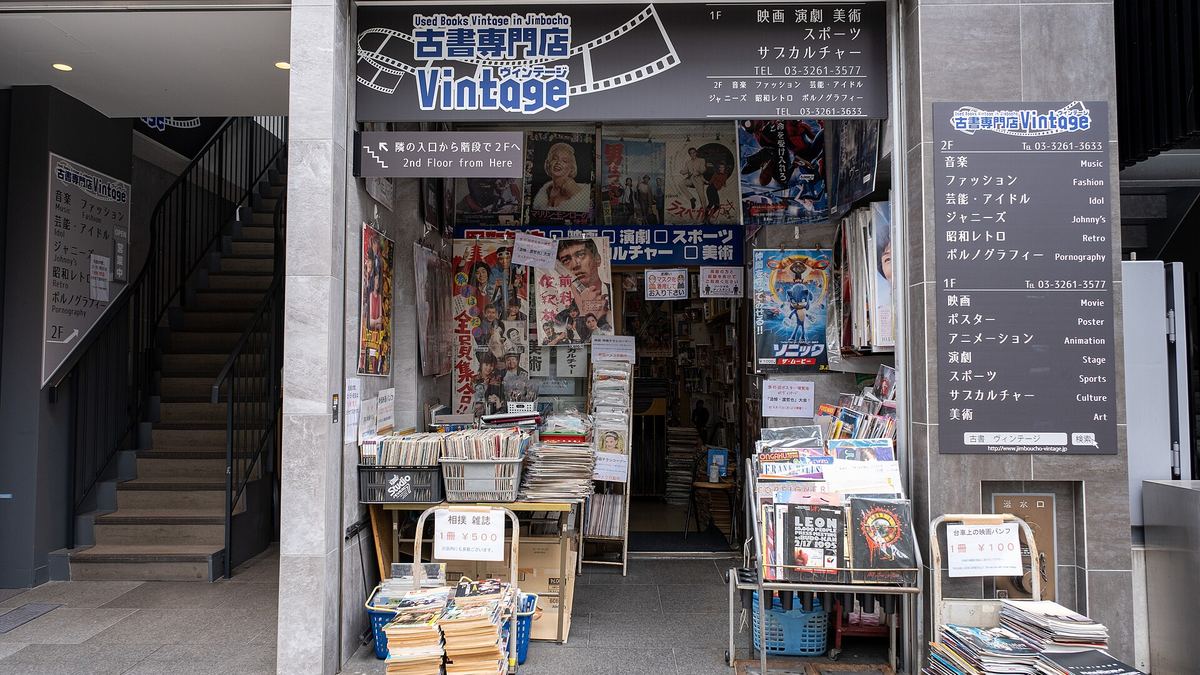
The stone staircase and shelves rising out of reach make it look forbidding

The stone staircase and shelves rising out of reach make it look forbidding, but browsing is perfectly fine. Ask staff to fetch anything on the high shelves.

Isseido Booksellers Chiyoda

Three heat levels

Three heat levels. This is a curry built on aroma rather than burn, so there is no need to push for the hottest.

Bondy Jimbocho Chiyoda

Two shops from 1955 stand side by side

Two shops from 1955 stand side by side. The original is for drinks and light snacks and is famous for the graffiti-covered walls; number two is for meals and will not seat you for a drink alone. People walk into the wrong one every single day.

Sabouru 2 Chiyoda

You order and pay at a window while still in line, receiving a wooden token

You order and pay at a window while still in line, receiving a wooden token. Visitors who do not realise this simply stand there being overtaken by everyone behind them.

Tamahide Chuo

Hand your shoes to the attendant at the entrance and take a numbered tag

Hand your shoes to the attendant at the entrance and take a numbered tag. Seating is sunken-floor style, so kneeling is not required, and tables are shared at busy times.

Tamahide Chuo

Tsukudani began as a fisherman's preserve

Tsukudani began as a fisherman's preserve, built to last when rough seas cut off supplies. So it keeps at room temperature and needs no cooking — few things travel home from Tokyo better. Spoon it onto tofu or fishcake and you have a drinking snack; the shop will tell you it goes with cream cheese too.

Tenyasu Honten Chuo

Everyone gets their own small spatula and eats straight off the griddle

Everyone gets their own small spatula and eats straight off the griddle — this is not a dish you portion onto plates. Several people scraping the same iron is the form it takes.

Tsukishima Monja Street Chuo

Eating as you walk is expressly prohibited by the market

Eating as you walk is expressly prohibited by the market. The lanes are narrow, and it obstructs and endangers people. The rule is to eat in front of the shop you bought from, or at a designated spot, then move on. Another of the eight rules tells you to leave wheeled suitcases in a coin locker. This is a wholesalers' district before it is a sight.

Tsukiji Outer Market Chuo

The Golden Gai standard ¥500 cover charge applies, cash only

The Golden Gai standard ¥500 cover charge applies, cash only. With 28 seats over two floors it is roomy for this street, and foreign customers are common — an easy first stop.

Albatross G Golden Gai Shinjuku

When a substantial rake sells

When a substantial rake sells, seller and buyer clap together chanting for safety and prosperity. That sound ringing across the grounds is the essence of the fair.

Hanazono Shrine Shinjuku

You return last year's rake and buy a new one — ideally larger than before

You return last year's rake and buy a new one — ideally larger than before. Buy from the same seller each year and they will add a tag bearing your name.

Hanazono Shrine Shinjuku

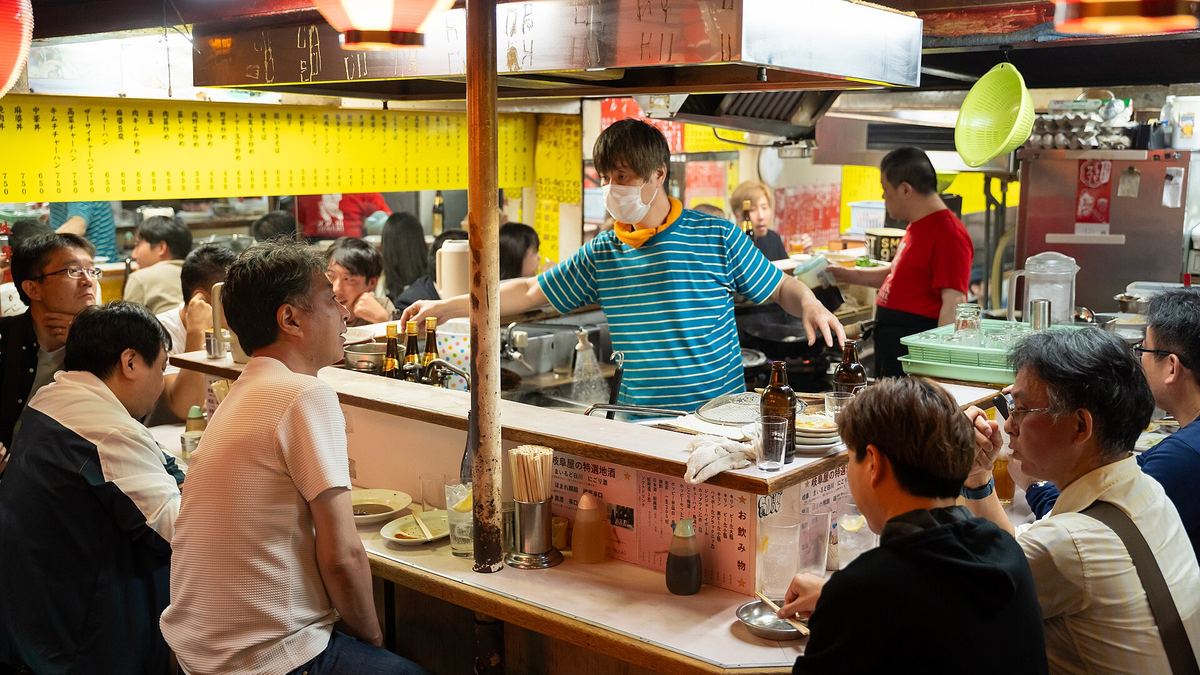
Round stools are packed along the counter and shoulders touch

Round stools are packed along the counter and shoulders touch. Shuffling along to let newcomers in is the etiquette here. Keep bags small enough for your lap — a suitcase is effectively impossible.

Omoide Yokocho Shinjuku

Rules differ shop to shop

Rules differ shop to shop — one dish per person, drink limits, no groups of three or more. They are posted at the door, so read before entering. Cash dominates, so carry small notes.

Omoide Yokocho Shinjuku

People move through these lanes constantly, so stopping to shoot blocks the way

People move through these lanes constantly, so stopping to shoot blocks the way. Step to the edge and be quick about it.

Omoide Yokocho Shinjuku

From outside it always looks full and you are tempted to give up

From outside it always looks full and you are tempted to give up, but by the time you have queued and paid, something has usually opened — standing spots included, the turnover is very fast. Do not hunt for a seat first; join the order line.

Beer & Cafe BERG Shinjuku

It is self-service: return your dishes to the counter when finished

It is self-service: return your dishes to the counter when finished. There is nearly always a queue, so vacating quickly is the courtesy here. A standing counter makes a single drink easy too.

Beer & Cafe BERG Shinjuku

Founded 1801

Founded 1801. The ground floor has no chairs — you remove your shoes, step onto tatami and sit at long low boards, exactly as in the Edo period. Ask for a chair seat if kneeling is difficult.

Komagata Dozeu Taito

Order the tendon and you get exactly that — soup and pickles are charged separately

Order the tendon and you get exactly that — soup and pickles are charged separately. If you want the full set, ask for the tendon teishoku instead.

Daikokuya Tempura Taito

When the ground floor fills you are sent upstairs

When the ground floor fills you are sent upstairs. The shoe tag you receive doubles as your order number, so leave it on the table. Tables are shared up there, and it is cash only.

Daikokuya Tempura Taito

The ground floor is pay-first

The ground floor is pay-first: buy a ticket at the register by the door, and staff collect it once you sit. When busy, locals grab a seat first, then buy. Second rounds can be ordered from your seat.

Kamiya Bar Taito

You can reserve by phone, and most locals do

You can reserve by phone, and most locals do. Turning up in the afternoon without one usually means going home empty-handed.

Pelican Bakery Taito

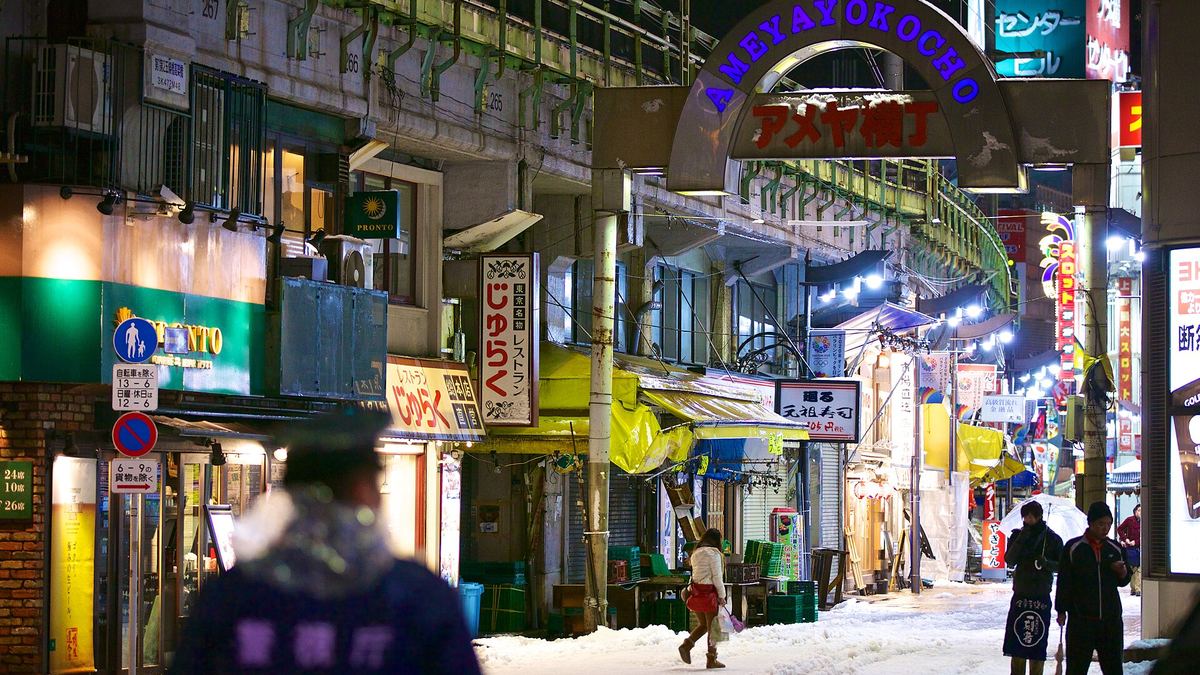
The year-end fish stalls take cash only

The year-end fish stalls take cash only. List what you want and fix a budget before you start bargaining. Crowds separate people easily, so locals name the statue in front of the Ameyoko Center Building as their meeting point.

Ameyoko Shopping Street Taito

Two or three large cherry leaves wrap the sweet completely

Two or three large cherry leaves wrap the sweet completely. They are there to lend fragrance and keep the mochi from drying, not to be eaten, and the shop recommends peeling them off. They are big and firm enough that eating all three is unreasonable, though some keep one for the scent and texture.

Chomeiji Sakuramochi Yamamotoya Sumida

Grilled skewers come two to a serving, so tasting just one of something is not possible

Grilled skewers come two to a serving, so tasting just one of something is not possible. Reservations are taken only for early-evening arrivals on weekdays, and not at all on Saturdays. If the main building is full there is a second one nearby, so do not give up at the first door. The shop states plainly that children under ten are not accommodated.

Yamariki Honkan Koto

Bukkake was food eaten fast on a boat

Bukkake was food eaten fast on a boat. Restaurants themselves say to put your mouth to the bowl and shovel it in with chopsticks. It looks rude by Western table manners; for this dish it is correct.

Fukagawa-meshi Koto

Drinking tea is the most visible gesture in the room

Drinking tea is the most visible gesture in the room, so a deeply tilted cup reads as 'nearly finished'. Cabbage, rice and pork soup are refilled on sight — no need to ask.

Tonki Meguro Meguro

Set meals come with unlimited rice and cabbage, plus one free refill of pork soup

Set meals come with unlimited rice and cabbage, plus one free refill of pork soup. New staff are told their first job is simply to spot what is running low and top it up.

Tonki Meguro Meguro

Founded in 1928

Founded in 1928. The karaage is coated in potato starch rather than flour, which is why it looks white instead of brown. That white karaage is close to a local staple food in Ota Ward — the starch seals the meat fast and traps the juices.

Torikyu Kamata Ota

The boxes are built on the premise that a bento is portable food

The boxes are built on the premise that a bento is portable food: the rice is meant to stay separate-grained as it cools, with the frying oil clinging to it. So those who know the shop eat it at room temperature, without reheating.

Torikyu Kamata Ota

Gyoza suggests garlic, but this lineage uses none

Gyoza suggests garlic, but this lineage uses none — the reasoning being that garlic buries the taste of the dumpling itself. The filling is simple, pork with cabbage and spring onion, and the thick wrapper eats like a boiled dumpling that has been fried. It also means you can eat them at lunch without worrying about your breath.

Nihao Honten Ota

Unlike the usual figure, these cats hold no gold coin

Unlike the usual figure, these cats hold no gold coin. The reason is a samurai maxim: the cat brings you the opportunity, but turning it into fortune is your own work.

Gotokuji Temple Setagaya

You are not obliged to leave your cat behind — taking it home is normal

You are not obliged to leave your cat behind — taking it home is normal. The thousands piled at the hall were brought back later, in thanks, by people whose wishes came true. Nine sizes exist and none is more potent than another.

Gotokuji Temple Setagaya

Admission is free and the grounds are vast

Admission is free and the grounds are vast, but this is a working Soto Zen temple with the Ii family graves. Worshippers and mourners share the space, so keep voices down and leave the tripod behind.

Gotokuji Temple Setagaya

House rules, stated outright

House rules, stated outright: no loud conversation, no photography of any kind, phones on silent with calls taken outside, no outside food. Even the staff move quietly. Walk in expecting a cafe and you will be caught off guard.

Meikyoku Kissa Lion Shibuya

Nobody greets you at the door

Nobody greets you at the door. Sit quietly wherever is free and water and the day's programme will arrive — the absence of service is itself consideration for the other listeners.

Meikyoku Kissa Lion Shibuya

Despite the live house downstairs, the ground-floor cafe carries no cover charge

Despite the live house downstairs, the ground-floor cafe carries no cover charge — just order food or a drink. With around ten thousand records and CDs on hand, anyone can request a track.

Rock Cafe B.Y.G Shibuya

Just eighteen seats, so there is almost always a queue

Just eighteen seats, so there is almost always a queue. Finish and stand — lingering after eating in a ramen shop is among the most frowned-upon things you can do in Japan.

Harukiya Ogikubo Suginami

No phone reservations

No phone reservations. One booking site only, and the slots for two months ahead all open at noon on the first Thursday of even-numbered months. Miss that moment and you wait another two months. Register an account and card in advance or you have no chance.

Kabuto Ikebukuro Toshima

First-time guests are served farmed eel only

First-time guests are served farmed eel only — the reasoning being that wild eel is wasted on a palate that cannot yet tell the difference. From the second visit, and only when wild stock has come in, you may be asked if you would like the comparison. The door really does open only for regulars.

Kabuto Ikebukuro Toshima

Beside the main hall stands the 'washing Kannon'

Beside the main hall stands the 'washing Kannon': pour water over the statue and wipe whichever part of it matches your own ailment. Scrubbing brushes wore the original away, so a new figure was installed in 1992 and cloth is used now.

Sugamo Jizo-dori Toshima

The staff call out loudly

The staff call out loudly, but most customers come alone and say little beyond their order, so it is busy without being noisy. Two connected U-shaped counters make solo seating easy, and there is no cover charge.

Marumasuya Kita

One of the standing bars that made Akabane a byword for getting drunk on a thousand yen

One of the standing bars that made Akabane a byword for getting drunk on a thousand yen. No chairs, so half an hour to an hour then move on — the local rhythm is hopping, not settling.

Tachinomi Ikoi Kita

Pay-as-you-go and cash-only is the norm

Pay-as-you-go and cash-only is the norm; a ten-thousand-yen note causes trouble, so bring small ones. The Ichibangai district is dense with these places, which makes bar-hopping easy.

Tachinomi Ikoi Kita

It works like a bus: board at the front, pay as you enter, alight at the rear

It works like a bus: board at the front, pay as you enter, alight at the rear. One flat fare covers any distance, and IC cards work. First-timers often try to board at the back.

Toden Arakawa Line Arakawa

The arcade runs about 560 metres from the station exit

The arcade runs about 560 metres from the station exit, so you can walk the whole length without an umbrella. More than two hundred shops line it, and from 1pm to 9pm daily vehicles are barred and it becomes a pedestrian street. Few places in Tokyo suit a rainy afternoon better.

Happy Road Oyama Itabashi

It sits on the pedestrian deck at the station's north exit

It sits on the pedestrian deck at the station's north exit, completed in 2015, so it is right there as you leave the gates. No admission, no opening hours. Five life-size bronze figures stand there, alongside a wall carrying a timeline of the ward's animation history and photographs from the film studios. Plenty of people are taking pictures, so just keep out of the walkway.

Oizumi Anime Gate Nerima

Open the door when it is full and you are told there is no room

Open the door when it is full and you are told there is no room. But if the waiting seats inside are free, you are effectively in — sit there quietly and they will place you as soon as a spot opens. Not knowing this, people simply turn around. The ones who leave smiling are the ones who know the rule.

Ohashi Kita-Senju Adachi

No photography inside — which is why every account of this place shows only the exterior

No photography inside — which is why every account of this place shows only the exterior. It also opens on weekday evenings only and closes at weekends. A queue forms before opening and the room fills the moment the doors part, so for anyone visiting Tokyo over a weekend there is simply no opportunity.

Ohashi Kita-Senju Adachi

Arrive having already had a drink elsewhere and you will be turned away

Arrive having already had a drink elsewhere and you will be turned away — so on a Tateishi pub crawl this place is always stop number one. Groups of three or more are difficult, bags are held in front of you, photos are of food only, and conversation stays quiet.

Uchida (Tateishi) Katsushika

Say 'okanjo onegaishimasu' and you settle at your seat

Say 'okanjo onegaishimasu' and you settle at your seat. You will be asked how many shochu you had — keep count and answer honestly. There is a per-person cap on the ume-wari, and for a final one you can ask for 'hanbun', a half at half price. Hold your bag in front on the way out too.

Uchida (Tateishi) Katsushika

The sushi is set straight onto the counter and no chopsticks appear

The sushi is set straight onto the counter and no chopsticks appear — you pick it up with your fingers. The rice is loosely formed and would fall apart on chopsticks anyway. Photography inside is not allowed.

Sakae Sushi Katsushika

The carved Lotus Sutra scenes on the gate and main hall are the real substance here

The carved Lotus Sutra scenes on the gate and main hall are the real substance here. The grounds are free but the carving gallery and garden are ticketed. Behind the temple sit Yamamoto-tei and the Tora-san museum.

Shibamata Taishakuten Approach Katsushika

Half a chicken arrives deep-fried whole

Half a chicken arrives deep-fried whole, and if you have no idea how to tackle it a staff member will break it down in front of you. But as a rule that is once per group, and not at all when they are busy — and it is over so fast that most people learn nothing. From the second plate you are on your own.

Torifusa Katsushika

A notice at the door refuses anyone who has been drinking

A notice at the door refuses anyone who has been drinking. Many independent shops in Tateishi do the same, which is why a crawl here always starts in a fixed place. Staff direct you precisely — where to sit, where to put your bag, where your shoes go — and following at once makes it easier for everyone. The brusqueness is not hostility.

Torifusa Katsushika

A ward-run traffic park, so nothing costs money

A ward-run traffic park, so nothing costs money. You can borrow pedal go-karts, bicycles and tricycles for a course laid out with real traffic lights, and pony rides and guinea-pig handling are free too. Few places in Tokyo offer that combination for nothing, all day.

Kamichiba Sunahara Park Katsushika

The shrine where the naming happened still holds a stone marker recording the story

The shrine where the naming happened still holds a stone marker recording the story, and enshrines the tutelary deity of the vegetable. It is not a groomed attraction but an ordinary shrine in a residential district — miss the sign and you walk straight past. Visiting is free and unrestricted. It is a rare case of being able to stand at the actual origin point of something people eat.

Katori Shrine (Komatsuna) Edogawa

'Antique Street' is a nickname — the shops are spread across 40 to 60 addresses

This is not a single arcade. Shops are scattered north and south of the station around the road nicknamed Kotto-dori, and counts range from over forty to over sixty depending on who is counting. Trying to see them all in one visit will wear you out.

Nishi-Ogikubo Antique Street Suginami

Rows A to D are flat; the rake begins at row E

Seats run A to Q front to back, 1 to 24 across. Rows A through D are almost level, so the head in front can get in the way; the stepped rake starts at row E. Row H is commonly cited as the best balance of view and price.

Honda Theater Setagaya

Your order is taken while you are still in the queue

Queues form before opening. Staff work the line with a menu and take orders in advance, so the food arrives soon after you sit — decide while you wait. At Aoki the custom is to start the line across the road rather than at the door.

Kamata Tonkatsu Big Three Ota

Charging admission would go against the founder's principle

Free since it opened in 1953, on the founder Satoru Kamegai's principle that education should not be charged for. A donation box stands at the entrance instead, and the second-floor shop is a vital source of running costs. Finances remain tight.

Meguro Parasitological Museum Meguro

The display is not there to shock

The first director was Professor Yoshitaka Otani of the law faculty. The faculty then held that punishment should be primarily educative, and the museum existed to make students grapple critically with how far cruel, pre-modern punishment fell short of that ideal.

Meiji University Museum — Criminal Materials Chiyoda

Heeled shoes will not do

Eight metres sounds like nothing, but the path is built from stacked natural rock and the footing is uneven. Heels are entirely unsuitable, and after rain the surface turns slippery. Visitors are advised to bring a handkerchief or towel.

Ekoda Fujizuka Nerima

Climb to the shrine first, then the mound

The shrine sits on high ground, so you take the main stone steps first. The entrance to the mound is separate, off to the left of those steps. First-timers walk straight past it to the main hall and have to come back. Spot the left-hand torii on the way in and you save the trip.

Shinagawa Fuji Shinagawa

There is a separate seal for those who have climbed

A commemorative seal is issued to those who reach the top (500 yen). The office takes requests from nine to five, so if you arrive late and only climb, you go home without one. The grounds are open around the clock; the desk is not.

Sendagaya Fuji Shibuya

Burn the incense first, then bow at the summit shrine

There is an order to it. You carry incense up the mound, throw it into the concrete vessel in front of the summit shrine — a stand-in for the burning cauldron — and let it burn. Only then do you bow to the shrine. Done this way, the merit is held to equal a climb of the real mountain.

Jujo Fujizuka Kita

The votive tablets come from a vending machine

There is no office and nobody to serve you: the votive tablets come out of a vending machine on the site, 1,000 yen with a charm, sold between six in the morning and nine at night. Turn up later and you can pray, but you cannot write.

Enkiri Enoki — the Bond-Severing Hackberry Itabashi

No photographs inside

Photography inside is expressly forbidden — not the crescent hinoki counter, not the stew pot. Take your picture of the frontage outside and then go in. Raising a camera without knowing the rule is the mistake foreign visitors make most often here.

Osakaya Koto

Do not photograph the people in the alley

There are several accounts of visitors being stopped mid-photograph here — 'some people don't want to be in your picture.' Not prying into the circumstances of men drinking from mid-afternoon is the local courtesy. Photographing a sign or the lane itself is one thing; photographing a person is another.

Oimachi Higashi-koji Alley Shinagawa

Do not settle in at one place

The lane is built for moving on. Each place is tiny and many are standing-only. Two or three drinks and out is the rhythm, and it is what lets the next person in. Stay put in one bar and you miss the point of the street.

Oimachi Higashi-koji Alley Shinagawa

Local timing

40

Closed Sundays

Closed Sundays. Open on public holidays but only until 6pm, and even that is irregular. The whole Jimbocho book quarter goes quiet on Sundays.

Sabouru Chiyoda

Closed Sundays — as are most Jimbocho bookshops, which leaves the whole quarter quiet

Closed Sundays — as are most Jimbocho bookshops, which leaves the whole quarter quiet. Plan any book-hunting for a weekday or Saturday.

Isseido Booksellers Chiyoda

Oyakodon is lunch-only and you must be in the queue by 1pm

Oyakodon is lunch-only and you must be in the queue by 1pm. A dozen people gather half an hour before opening, sometimes thirty by the time the doors open — and far more on auspicious calendar days when nearby Suitengu draws crowds.

Tamahide Chuo

The first of the market's eight posted rules is that mornings belong to the buyers

The first of the market's eight posted rules is that mornings belong to the buyers. Until 9am the aisles are for restaurant people sourcing stock, so if you see someone working the stalls, stay out of their way. After nine is when visitors can move comfortably — and go too early and many shops are not open yet.

Tsukiji Outer Market Chuo

The outer market is a shopping street

The outer market is a shopping street, but many shops close on the days the wholesale market does: Sundays, public holidays and Wednesdays. On some of those days more than half are shut, so Monday, Tuesday, Thursday and Friday are the safe bets. Saturday is open but at its most crowded. There is a closure calendar on the official site.

Tsukiji Outer Market Chuo

There is a separate 'kawari-soba' with a seasonal ingredient worked into the white dough

There is a separate 'kawari-soba' with a seasonal ingredient worked into the white dough. It only works because the pale base lets the colour and scent come through, and what goes in changes through the year — which is why people return to the same shop in different seasons. Small dishes such as sliced fish cake with wasabi are on the menu too, so daytime drinking is possible.

Sarashina Horii Minato

Most of Golden Gai is shuttered before 8pm

Most of Golden Gai is shuttered before 8pm. This place opens at 7pm and runs to 5am — arrive earlier and you will find the whole street empty.

Albatross G Golden Gai Shinjuku

Until 2am on weekdays, 5am Friday and Saturday

Until 2am on weekdays, 5am Friday and Saturday. The whole lane keeps this rhythm — walking it after midnight is the experience itself.

Albatross Omoide Yokocho Shinjuku

Early evening is easiest; the density climbs as the night deepens

Early evening is easiest; the density climbs as the night deepens. Weekends fill fast, so arrive early if you have a particular place in mind.

Omoide Yokocho Shinjuku

Seconds on foot from the east ticket gates of Shinjuku Station

Seconds on foot from the east ticket gates of Shinjuku Station. Open from 7am to 11pm, so the person eating bread and coffee at dawn shares a counter with the person drinking beer at dusk. That mix of tourists, office workers and pensioners is itself a cross-section of Shinjuku.

Beer & Cafe BERG Shinjuku

At year end the clothing and shoe shops close early and rent their frontage to

At year end the clothing and shoe shops close early and rent their frontage to fishmongers, so the street changes trade entirely. The 30th is peak crush; by the morning of the 31st things sell out — but the later it gets, the harder shops cut prices to clear stock.

Ameyoko Shopping Street Taito

A dango shop from the Keio era stands within sight of here

A dango shop from the Keio era stands within sight of here, and doing both is the standard Mukojima route. Its dango come loose rather than on skewers, in three kinds: red bean, white bean and miso. Add a kusa-mochi house and you have the 'three great sweets of Mukojima', all within walking distance.

Chomeiji Sakuramochi Yamamotoya Sumida

Vehicles are barred from mid-afternoon to early evening

Vehicles are barred from mid-afternoon to early evening, turning the street into a pedestrian zone — the time to come. At roughly 1.3km it is Tokyo's longest, with the station at its midpoint.

Togoshi Ginza Shotengai Shinagawa

It opens early, yet by around 11am the queue already turns the corner of the building

It opens early, yet by around 11am the queue already turns the corner of the building, and the popular boxes often sell out before lunchtime proper. The side-dish shop next door has its own separate line — join that one if you only want the karaage. Cash only.

Torikyu Kamata Ota

Scheduled concerts at 3pm and 7pm daily, with the programme handed to you on arrival

Scheduled concerts at 3pm and 7pm daily, with the programme handed to you on arrival. Outside those hours you may request a piece, or bring your own record or CD. The collection runs past ten thousand discs.

Meikyoku Kissa Lion Shibuya

Next door is Lion, where talking is forbidden and only classical plays

Next door is Lion, where talking is forbidden and only classical plays. BYG is its exact opposite — requests and conversation both welcome. Circuit these two plus Murugi and you have the insider's tour of Hyakkendana.

Rock Cafe B.Y.G Shibuya

The Lion classical-music cafe is a minute away

The Lion classical-music cafe is a minute away, and 'Murugi then Lion' is the standing local itinerary. Seats fill at lunch, so aim for the 11:30 opening.

Murugi Shibuya

On the fourth floor especially

On the fourth floor especially, most shops open between eleven and noon, so going up in the morning you find a street of closed shutters. The rumours that the fourth floor is eerie owe a lot to that hour. By afternoon it fills up — though if the empty atmosphere is what you want, go before opening.

Nakano Broadway Nakano

Fairs fall on the 4th, 14th and 24th of each month

Fairs fall on the 4th, 14th and 24th of each month. Traditionally only the 24th counted, but the temple that moved here in 1891 extended it to every day with a four in it to draw crowds. On those days stalls line the 800m street and the place is transformed.

Sugamo Jizo-dori Toshima

Doors open at ten on weekdays, nine at weekends

Doors open at ten on weekdays, nine at weekends. The area was full of munitions factories, and bars opened early for workers coming off night shifts — which is why Akabane still has morning drinking. Queues form before opening.

Marumasuya Kita

True to its nickname, Tokyo Sakura Tram, Asukayama and Zoshigaya are cherry spots

True to its nickname, Tokyo Sakura Tram, Asukayama and Zoshigaya are cherry spots. Along the Arakawa stretch, residents tend some twelve thousand rose bushes that bloom in late spring and mid-autumn.

Toden Arakawa Line Arakawa

It is easy to see the statues and leave

It is easy to see the statues and leave, but a museum run by the studio itself stands about fifteen minutes' walk from the same exit. It closes Wednesdays and on irregular days, so check first. Every May an animation event fills the streets around the station. What sets this ward apart is that it is a working industry, not a sight.

Oizumi Anime Gate Nerima

The rare cuts appear only right at opening on weekdays, and kashira sells out early too

The rare cuts appear only right at opening on weekdays, and kashira sells out early too. But opening time is packed with veterans and daunting for a first-timer. If shiro, abura, gatsu and the stew are enough for you, late afternoon on a weekday is far calmer. When the cuts run out, the day simply ends.

Uchida (Tateishi) Katsushika

In Tateishi the accepted order is motsuyaki first, then here

In Tateishi the accepted order is motsuyaki first, then here — vinegared rice to rinse away the fat and heavy tare. It is standing-only so it turns over fast, though plenty of customers are drinking from midday, and the queue moves slower than you would expect.

Sakae Sushi Katsushika

Doors open at 2pm on weekdays, noon on Saturdays

Doors open at 2pm on weekdays, noon on Saturdays — this is a daytime drinking house, not an evening one. Those hours are exactly why Tateishi is called the capital of afternoon drinking. Closed Sundays, and small enough that a weekend booking is wise.

Oden Nimousaku Katsushika

Walk past the shops to the Edogawa and you will find the Yagiri ferry still running

Walk past the shops to the Edogawa and you will find the Yagiri ferry still running — one of the last in Tokyo. At weekends the floodplain fills with junior baseball practice.

Shibamata Taishakuten Approach Katsushika

The park never closes, but each facility keeps its own hours

The park never closes, but each facility keeps its own hours. The ride equipment runs 9:00–16:30 with sign-up ending at 16:00. The animal exhibit, pony rides and petting corner operate Wednesday to Sunday and holidays only, closed Mondays, Tuesdays and the day after a holiday. Turn up on a Monday and only the rides remain.

Kamichiba Sunahara Park Katsushika

This is not merely where the story happened

This is not merely where the story happened: the ward still produces around forty percent of all the crop grown in Tokyo. Winter is the season, and frost drives sugar into the leaves and sweetens them. The custom of putting this green in New Year soup across the Kanto region spread from here. The greens floating in your soup at a Tokyo set-meal shop in winter are very likely these.

Katori Shrine (Komatsuna) Edogawa

The Shinmei-dori morning market, third Sunday monthly, running since 1975

The Shinmei-dori shopping street closes to traffic for this monthly morning market, held since 1975. Fresh produce, tea, coffee, sweets and sundries are sold alongside food stalls and a flea market. There is a children's park and cafés nearby, so it works with kids in tow.

Nishi-Ogikubo Antique Street Suginami

On the third weekend of November, participating shops serve free tea

Chasanpo, a neighbourhood walking event started in 2009, runs over the third Saturday and Sunday of November. Participating shops offer free tea (restaurants excepted), and some add exhibitions or workshops. In 2024, fifty-six businesses took part.

Nishi-Ogikubo Antique Street Suginami

Several theatres from the same group are within walking distance, at different scales

Besides the 386-seat main house, the group runs Ekimae Theater (180 seats) on the third floor of a building by the station, OFF·OFF Theater (80–90) on the same floor, The Suzunari (170–230) and Geki Small Theater (130) — all within a few minutes' walk. The smaller the room, the more likely it hosts an emerging company.

Honda Theater Setagaya

Closed Mondays and Tuesdays — two days a week

It closes two days a week, Monday and Tuesday, which catches out visitors planning around a weekend. If either falls on a public holiday it opens and closes on the nearest weekday instead. Hours are 10:00 to 17:00.

Meguro Parasitological Museum Meguro

Closed Sundays and holidays; Saturdays end an hour early

Being a university facility it closes on Sundays and public holidays, with summer and winter breaks as well. Weekdays run to 17:00 but Saturdays end at 16:00. Allow thirty minutes to an hour at a brisk pace.

Meiji University Museum — Criminal Materials Chiyoda

You can climb it on about three occasions a year

It is closed for conservation most of the year. Climbing is permitted only over the first three days of January, on 1 July for the opening of the mountain, and on the second Saturday and Sunday of September during the shrine's annual festival. On 1 July the hours are 9am to about 3pm.

Ekoda Fujizuka Nerima

From the sixth station it turns steep — take the chain

Steps run up from the torii, but partway the slope sharpens and a chain appears to hold. It is barely five minutes to the top, yet people in smooth-soled shoes stop here. After rain the lava surface is slick — better to leave it for another day.

Shinagawa Fuji Shinagawa

Open any day — except when it is not

The shrine says you may climb at any time. It does close for festivals, for cleaning and pruning, and for the firelight Noh held in May. The shrine also asks visitors to come in daylight — there is no lighting on the mound.

Sendagaya Fuji Shibuya

You can climb it on 30 June and 1 July only

The mound itself is off limits most of the year; climbing is allowed only over the two days of the great festival timed to the opening of Mount Fuji. The ward gives the hours as nine to eight, with climbing ending at eight and the rites at half past. Outside those two days you pray from the foot.

Jujo Fujizuka Kita
11

The eleventh of each month is Benten's day

On the eleventh of every month the arcade runs its Benten-sama day with special offers. Regulars come for it, so the street is busier than usual. If you want it quiet, pick another day.

Joyful Minowa Shopping Street Arakawa

Elderly in the morning, households at dusk

This is a shopping street for living, not for sightseeing. Prepared-food shops dominate; in the morning the customers are elderly neighbours, at dusk they are people buying dinner. The hours when visitors come to photograph 'unchanged Showa' are not the hours when the street is actually working.

Joyful Minowa Shopping Street Arakawa

Only Tuesdays and Fridays run to seven

Standard hours are ten to five, but Tuesday and Friday run until seven — the only two days you can come after work. Closing days are irregular and differ month to month, so check the calendar on the official site. Being inside a university, the academic timetable moves things too.

Waseda University Theatre Museum Shinjuku

The backstory

67

Founded 1924

Founded 1924. The black roux uses no wheat flour at all — over thirty roasted spices and vegetables alone give it body. It pours thin, yet tastes deep. The name comes from a Sumatran recipe adapted to Japanese palates.

Sumatra Curry Kyoeido Chiyoda

Founded 1955

Founded 1955. One alley off Yasukuni-dori, marked by a totem pole and a red payphone. The narrow stairs down and the graffiti covering every wall have been unchanged for sixty years.

Sabouru Chiyoda

Founded 1949 and credited as the first place in Japan to serve Vienna coffee topped

Founded 1949 and credited as the first place in Japan to serve Vienna coffee topped with cream. The brick walls and low light still carry the postwar attempt to recreate a European cafe.

Ladrio Chiyoda

Milonga is Spanish for a tango dance gathering

Milonga is Spanish for a tango dance gathering — and the shop plays nothing but tango records, open to close. It is loud; for conversation, go next door.

Milonga Nueva Chiyoda

Founded 1903 and regarded as the root of the Jimbocho book trade

Founded 1903 and regarded as the root of the Jimbocho book trade — a great many dealers on this street trained here. It burned down in the 1913 Kanda fire and reopened almost immediately under the name it still carries.

Isseido Booksellers Chiyoda

Founded 1978

Founded 1978. By building curry on a French brown sauce with fruit, vegetables and its own spice blend, it is credited with creating the 'European-style curry' genre — the reason Jimbocho became a curry pilgrimage site.

Bondy Jimbocho Chiyoda

Founded 1880 and famous for the lilting call the woman at the register uses to relay

Founded 1880 and famous for the lilting call the woman at the register uses to relay orders to the kitchen. When fire destroyed the building in 2013, the call came back unchanged with it.

Kanda Yabu Soba Chiyoda

An art-supply house in the middle of the book quarter

An art-supply house in the middle of the book quarter. Its stone facade survives intact and draws visitors on its own; locals treat it as the place to go when the bookshops wear you out.

Bumpodo Chiyoda

Founded 1760 as a shamo hotpot house

Founded 1760 as a shamo hotpot house. In the 1890s the fifth owner's wife, Toku, watched customers pour beaten egg into leftover hotpot broth over rice — and oyakodon was born. Without this shop the dish would not exist.

Tamahide Chuo

Tsukudani is named after neither an ingredient nor a method, but a place

Tsukudani is named after neither an ingredient nor a method, but a place. Fishermen brought from Tsukuda village near Osaka in the early Edo period settled on this island and simmered the leftover small fish they could not present to the shogun, as a preserve. Three tsukudani houses dating from the Edo period still stand side by side in this one block, in a district that escaped the war.

Tenyasu Honten Chuo

In the postwar years

In the postwar years, when paper and brushes were scarce, adults wrote characters on the griddle with thin batter to teach children. 'Moji-yaki' — letter-frying — slurred into monja. It began as a sweet-shop snack for kids.

Tsukishima Monja Street Chuo

Where most Golden Gai bars are cramped and dim

Where most Golden Gai bars are cramped and dim, this one is hung wall-to-ceiling with chandeliers. It doubles as a gallery with occasional exhibitions.

Albatross G Golden Gai Shinjuku

In the middle of Shinjuku's Memory Lane, an absurdly narrow three-storey building

In the middle of Shinjuku's Memory Lane, an absurdly narrow three-storey building. Climbing its tight staircase is part of the experience — you reach it through a corridor of yakitori smoke.

Albatross Omoide Yokocho Shinjuku

Haggling over the lucky rake is a ritual: beat the seller down until he concedes

Haggling over the lucky rake is a ritual: beat the seller down until he concedes — then leave the difference as a gratuity. The bargaining is the point, not the discount.

Hanazono Shrine Shinjuku

During the fair a temporary misemono-goya sideshow opens

During the fair a temporary misemono-goya sideshow opens — a Showa-era form of entertainment now virtually unique to this shrine. Suspended during the pandemic, it returned in 2023.

Hanazono Shrine Shinjuku

It was a traditional kissaten in 1970, and went self-service in 1990

When it opened in 1970 it was an ordinary kissaten with table service. The switch to self-service came in 1990 and made it what it is now — an old shop that gave up formality rather than lose its customers, and in doing so kept the cheapest coffee at Shinjuku station. Traces of the older place survive in the heavy cups and the lettering on the wall menus.

Beer & Cafe BERG Shinjuku

The building is a converted Meiji-era stone warehouse

The building is a converted Meiji-era stone warehouse, redesigned in 2005 by the architect Kengo Kuma. High ceilings, exposed beams, and a garden visible through glass.

Nezu Kamachiku Bunkyo

After the 1730 fire, magistrate Ooka Tadasuke ruled that buildings south of this shop

After the 1730 fire, magistrate Ooka Tadasuke ruled that buildings south of this shop must have tiled roofs while those north kept thatch. The line became the felt edge of Edo, preserved in a senryu verse still displayed on the shopfront.

Kaneyasu Bunkyo

The founder made his fortune on a tooth powder and set his brother up in business

The founder made his fortune on a tooth powder and set his brother up in business; the two shops later went to court over which was the original. Ooka ruled that one write its name in kanji and the other in kana — which is why the Hongo shop is spelled かねやす.

Kaneyasu Bunkyo

The fish is properly written どじょう in four characters

The fish is properly written どじょう in four characters. The first owner thought four unlucky and switched to the three-character どぜう — the misspelling has stood for over two centuries.

Komagata Dozeu Taito

Fried in sesame oil alone

Fried in sesame oil alone, then dipped whole in a dark sauce until even the rice turns black. Expect crispness and you will be thrown — the batter soaked limp with sauce is precisely the intended result.

Daikokuya Tempura Taito

The sweet-dark sauce may be mixed only by the owner

The sweet-dark sauce may be mixed only by the owner, who reportedly clears the room to do it. The recipe exists nowhere on paper — only in his head.

Daikokuya Tempura Taito

Three floors, three different businesses

Three floors, three different businesses: a working-class bar below, a Western restaurant above, a Japanese kappo on top. Alone? Take the ground floor — shared tables make it easier, and the 1880s social-club air exists only there.

Kamiya Bar Taito

You need not just carry the bread away

You need not just carry the bread away — the company runs Pelican Cafe nearby, serving the same loaf as thick-cut toast. The bakery closes Sundays; the cafe keeps different hours.

Pelican Bakery Taito

Founded 1895

Founded 1895. The only government-licensed abattoir in the Kanto region then stood in Imazato-cho, and shops sourcing from it took the character 今 into their names. The 半 comes from founder Hantaro Aizawa.

Imahan Honten Taito

Founded 1860, the oldest soba house in Asakusa

Founded 1860, the oldest soba house in Asakusa. The novelist Nagai Kafu came so often he always took the same seat, and the chicken soba he ate daily is still on the menu because of it.

Owariya Asakusa Taito

Against the assumption that more marbling is better

Against the assumption that more marbling is better, this house uses what it calls 'appropriately marbled' beef — thirty-month-raised, low melting point, very fine grain — to its own defined standard.

Chinya Taito

Founded in 1717

Founded in 1717. The founder was a gatekeeper at the temple here, worn down by sweeping fallen cherry leaves each spring, and tried pickling those leaves in salt and wrapping them around mochi to sell. It was born from a nuisance, not an ambition — and it became the prototype of the Kanto-style sakura-mochi.

Chomeiji Sakuramochi Yamamotoya Sumida

A shop from 1925, yet the stew contains red wine and a bouquet garni

A shop from 1925, yet the stew contains red wine and a bouquet garni — added by the third-generation owner, a trained French cook who took over when his father's health failed. That is why it tastes unlike any other stew in Tokyo, and why wine sits alongside the sake. Only beef shiro and giara go in, simmered over six hours.

Yamariki Honkan Koto

Land reclamation ended the clam beds and the dish vanished

Land reclamation ended the clam beds and the dish vanished. After the Fukagawa Edo Museum opened in 1981 and visitors returned, a local restaurant rebuilt the recipe by consulting surviving fishermen.

Fukagawa-meshi Koto

This is the first of the three-hundred-odd '○○ Ginza' shopping streets nationwide

This is the first of the three-hundred-odd '○○ Ginza' shopping streets nationwide. After the 1923 earthquake levelled Ginza's brick buildings, merchants here hauled the rubble back by cart and paved their poorly-draining street with it.

Togoshi Ginza Shotengai Shinagawa

Waiting customers sit anywhere along the wall

Waiting customers sit anywhere along the wall, yet the host calls them strictly in arrival order — from memory, with no tickets and no list, even with dozens jumbled together. People come just to watch it happen.

Tonki Meguro Meguro

Revealed in an owner interview

Revealed in an owner interview: when cross-cutting the cutlet, staff adjust bite size to the customer's age, build and sex — an extra cut for someone who looks frail, one fewer for a big eater. You can also request your own.

Tonki Meguro Meguro

Among Tokyo television crews this is a byword for the location bento

Among Tokyo television crews this is a byword for the location bento. Enough on-screen personalities have named it as their favourite that it became a box the country knows by name even without tasting it. Its character is that of working-site food, not tourist food.

Torikyu Kamata Ota

Founded in 1983, this is held to be the birthplace of the winged gyoza

Founded in 1983, this is held to be the birthplace of the winged gyoza. Its founder adapted the idea from a winged grilled bun he knew from Dalian in China. And the other two shops of Kamata's so-called 'big three' belong to his younger brother and younger sister — not rivals but branches of one family. Knowing that changes what a three-shop crawl means.

Nihao Honten Ota

Legend has it that lord Ii Naotaka

Legend has it that lord Ii Naotaka, returning from a hawking trip, was beckoned inside by a white cat at the gate — and so escaped a lightning strike. The temple became the Ii family's mortuary temple, and one of the claimed birthplaces of the beckoning cat.

Gotokuji Temple Setagaya

Founded in 1926, burned out in the 1945 air raids, and rebuilt five years later to

Founded in 1926, burned out in the 1945 air raids, and rebuilt five years later to exactly the same design. The lion reliefs and carved pillars were cut by the founder himself. It stands frozen in time amid the love-hotel signage behind Dogenzaka.

Meikyoku Kissa Lion Shibuya

Opened in 1969; the name stands for Beautiful Young Generation

Opened in 1969; the name stands for Beautiful Young Generation. Its basement is called Japan's oldest live house, and the bands that founded Japanese rock played here — their signatures cover the ground-floor walls.

Rock Cafe B.Y.G Shibuya

In 1973 the owner shut the live house

In 1973 the owner shut the live house, saying no band was left worth backing, and ran it as a rental studio for some thirty years. He reopened it in the 2000s after being moved by BEGIN's blues.

Rock Cafe B.Y.G Shibuya

The founder, a mining engineer, recreated a curry he could not forget from wartime Burma

The founder, a mining engineer, recreated a curry he could not forget from wartime Burma. 'Murugi' is Hindi for chicken. Despite its near-black colour, the sauce leads with a fruity sweetness before the heat builds.

Murugi Shibuya

Right beside a Shibuya Station that never stops being rebuilt

Right beside a Shibuya Station that never stops being rebuilt, a narrow lane of tiny bars called Nonbei Yokocho survives intact. This yakitori house has run inside it for close to ninety years. It is minutes from the scramble crossing full of tourists, yet stepping into the lane changes the decade.

Torifuku Shibuya Shibuya

Built in 1966 as a mixed commercial and residential block

Built in 1966 as a mixed commercial and residential block: shops occupy the basement to the fourth floor, and above them people actually live. It was sold as luxury housing at the time, with a rooftop garden and even a putting green. Being a subculture mecca was never the building's purpose.

Nakano Broadway Nakano

In 1980 a second-hand manga shop opened in a space of about two tsubo

In 1980 a second-hand manga shop opened in a space of about two tsubo, carved out of an already subdivided unit on the second floor. It grew by widening its range to animation cels, old enamel signs and dolls, and when the 1990s recession emptied units, specialist shops moved in to catch its customers. That is why over thirty branches of the same chain are now scattered through the building.

Nakano Broadway Nakano

Started from a postwar street stall and has held the same flavour for over seventy years

Started from a postwar street stall and has held the same flavour for over seventy years. Ogikubo became a ramen battleground because of this shop — its niboshi-heavy soy broth and thick wavy noodles founded a lineage.

Harukiya Ogikubo Suginami

In 1961 Kazuo Yamagishi served a staff-meal dish called morisoba in Higashi-Ikebukuro

In 1961 Kazuo Yamagishi served a staff-meal dish called morisoba in Higashi-Ikebukuro. Regulars talked, it joined the menu, and it created the entire tsukemen genre — still known abroad simply as Taishoken.

Higashi-Ikebukuro Taishoken Toshima

In 1715 a maid swallowed a needle

In 1715 a maid swallowed a needle. She was given one of the temple's paper talismans to drink down, and the needle reportedly came back up pierced through it. 'Needle-pulling' became 'thorn-pulling', and so the temple got its name.

Sugamo Jizo-dori Toshima

Founded 1950

Founded 1950. With an established eel house nearby, the founder hesitated — until his wife pointed out that Osaka streets carry several okonomiyaki shops apiece. He kept the eel and added carp, and the place found its niche.

Marumasuya Kita

The sole survivor of a network that once ran forty lines

The sole survivor of a network that once ran forty lines. Most were scrapped as cars took over; this one lasted because so much of it runs on dedicated track — only 1.7 of its 12.2km share the road.

Toden Arakawa Line Arakawa

This ward is where Japan's first feature-length colour animation was made

This ward is where Japan's first feature-length colour animation was made. A studio said to be the largest in Asia was completed in Higashi-Oizumi in 1956, and that film emerged from it in 1958. In 1961 Osamu Tezuka founded his production company in Fujimidai and made the country's first weekly television series. Over ninety animation companies still operate in the ward.

Oizumi Anime Gate Nerima

Founded in 1877 and counted among Tokyo's three great stews

Founded in 1877 and counted among Tokyo's three great stews — yet what most customers actually order is the niku-dofu. Simmered in the same pot as the beef stew but with less meat and a large block of tofu, it costs the same. The taste is close to sukiyaki, sweet and salty with soy and sugar. There is a tofu-only version too.

Ohashi Kita-Senju Adachi

Toraya, founded 1887, played Tora-san's family home in the first four Otoko wa Tsurai

Toraya, founded 1887, played Tora-san's family home in the first four Otoko wa Tsurai yo films. It was renamed from Shibamataya in 1989, and the staircase and old posters are still there.

Shibamata Taishakuten Approach Katsushika

Komatsuna, a green found on tables all over Japan, was once a vegetable with no name

Komatsuna, a green found on tables all over Japan, was once a vegetable with no name. In 1719 the eighth shogun stopped here while hawking, and the shrine's priest hurriedly served a clear soup with rice cake, garnished with the local greens. The shogun liked it, asked what the greens were called, and on hearing they had no name, ordered that they be named after this village. A place name became a vegetable.

Katori Shrine (Komatsuna) Edogawa

It began with the houses of intellectuals who moved here after the 1923 earthquake

Many cultural figures displaced by the 1923 Kanto earthquake resettled in this area. As furniture and fittings from the houses they built came onto the market, dealers in antiques multiplied along the street. By the 1980s the 'antique street' identity was already established.

Nishi-Ogikubo Antique Street Suginami

Opened 1982 with 386 seats — the starting point of Shimokitazawa as a theatre town

Opened on 3 November 1982 with 386 seats — not large, but its arrival made Shimokitazawa the centre of small-theatre work in Tokyo. It is run by the Honda Theater Group, whose founder Kazuo Honda went on to open several more venues in the neighbourhood.

Honda Theater Setagaya

Cooks who trained in Ueno went independent and gathered here

Kamata became a tonkatsu battleground because of the earlier cutlet boom in Ueno. Cooks who trained there set up on their own here, and through sister shops and noren-wake the district now has over fifty places competing.

Kamata Tonkatsu Big Three Ota

Beside the 8.8-metre tapeworm hangs a cord of the same length

The centrepiece is an 8.8-metre broad tapeworm taken from a human body. A white cord of identical length hangs beside it, so you can pull it out and feel the scale. The man who hosted it reportedly noticed nothing for three months.

Meguro Parasitological Museum Meguro

The guillotine and the Iron Maiden of Nuremberg exist nowhere else in Japan

Both are reproductions, but they are the only ones on public display in Japan. They were built alongside the Japanese exhibits when the museum opened in 1929, to set Edo-period punishment against European practice of the 17th and 18th centuries. The craftsmanship would cost millions of yen to replicate today.

Meiji University Museum — Criminal Materials Chiyoda

The models were reconstructed from a magistrate's confidential record

Instruments of torture and execution were not the sort of thing preserved as historical record, so no originals could be found. The models were instead reconstructed from the detailed descriptions in a confidential late-Edo magistrate's manual. Those 1929 models are still the ones on display.

Meiji University Museum — Criminal Materials Chiyoda

A mountain built in town for those who could not reach the real one

Born of the Fuji devotion that flourished in the Edo period, these mounds were raised so that people who could never make the climb could still make the pilgrimage — the merit was held to be the same. The surface is faced with genuine lava carried from the mountain.

Ekoda Fujizuka Nerima

This mountain had its eastern flank cut off

What you see is not the original shape. The Daiichi-Keihin highway took away the eastern side in the early twentieth century, and from the road you can see where the hill has been cut unnaturally flat. It had already been raised in 1869, destroyed under the separation of Shinto and Buddhism, and rebuilt in 1872.

Shinagawa Fuji Shinagawa

The oldest one left in Tokyo

Said to date from 1789. It was repaired after the 1923 earthquake but retains its old form, which earned it the metropolitan designation. Earth is heaped into a round barrow, with lava brought from Fuji laid only near the top. Sources put the height at six metres, or at seven.

Sendagaya Fuji Shibuya

A shogun's bride had a detour built to avoid it

In 1861, when Princess Kazunomiya went down to marry the fourteenth shogun, passing this tree was thought unlucky, so a detour was built in advance and the procession took it into the Itabashi post station. Another account says the tree was wrapped in matting and the party passed beneath; the records support the detour.

Enkiri Enoki — the Bond-Severing Hackberry Itabashi

The tram came first, then the street

The association dates the street to 1919, and the cause to the tramway that opened six years earlier. People gathered at the terminus, and the shops followed. The arcade still runs parallel to the tracks, from Minowabashi stop to Arakawa-itchumae.

Joyful Minowa Shopping Street Arakawa

The 'three great nikomi' came out of one book

It begins with Ota Kazuhiko's 1990 book, which named Ohashi, Yamariki and Kishidaya as the three. Uchida in Tateishi and this shop were added later to make five. No body certified any of it; one writer's list simply stuck.

Osakaya Koto

The building is a copy of a Elizabethan playhouse

Tsubouchi Shoyo proposed it and Imai Kenji designed it after the Fortune Playhouse of Elizabethan London. The projecting front is the stage, with entrances either side; the reading room is the tiring house, the wings are the galleries, the forecourt is the yard. The whole building is a theatre plan.

Waseda University Theatre Museum Shinjuku

The shape of a postwar black market

After the 1945 air raids levelled the area, the ground around the station became a black market, and modern Oimachi grew out of clearing it up. Higashi-koji and Heiwa-koji are what the clearing missed. Alleys like these were once all over Tokyo; redevelopment has left only a handful.

Oimachi Higashi-koji Alley Shinagawa

Three shops in this district share one root

Three shops in Azabu-juban descend from the house founded in 1789. Sarashina Horii, this Nagasaka Sarashina Nunoya Tahei, and Azabu Nagasaka Sarashina Honten. Same root, three separate companies.

Nagasaka Sarashina Nunoya Tahei Minato

Heads-up

23

The signature napolitan comes heaped in a mound that would count as a large portion

The signature napolitan comes heaped in a mound that would count as a large portion anywhere else, even when ordered regular. You can pay extra to upsize it, but even big eaters advise against it. Sharing one plate between two and each taking a drink is the realistic move.

Sabouru 2 Chiyoda

Deeper into the market

Deeper into the market, especially around the building housing the intermediate wholesalers, you may be stopped from taking photographs — they would rather their goods and dealings were not recorded. Some shops say nothing, but asking first is safer. Plenty of stalls still take cash only, so bring some.

Tsukiji Outer Market Chuo

Three soba houses using the name Sarashina stand within five minutes' walk of each

Three soba houses using the name Sarashina stand within five minutes' walk of each other here, and despite the similar names they are entirely separate businesses. This is the one descended from the founder of 1789; the other two arrived at their present names through postwar trademark disputes and settlements. Go by the sign alone and you may not be in the shop you meant.

Sarashina Horii Minato

It held the same corner for nearly four centuries

It held the same corner for nearly four centuries, but the ground-floor shop has been closed since around 2021. The building and sign remain — visit it as a marker of Edo's boundary rather than as a shop.

Kaneyasu Bunkyo

The standard is 30% ABV, the 'Old' version 40%

The standard is 30% ABV, the 'Old' version 40%. It goes down sweet but hits like whisky — 'three glasses and you are not getting home' is a standing local joke.

Kamiya Bar Taito

Asakusa has three separate businesses called Imahan

Asakusa has three separate businesses called Imahan, all under different management with different prices and menus. Check carefully which one you are booking.

Imahan Honten Taito

There is a main shop and a branch on the same street

There is a main shop and a branch on the same street, closing Fridays and Wednesdays respectively — so if one is shut, the other is probably open.

Owariya Asakusa Taito

The marked price on year-end frozen tuna means little

The marked price on year-end frozen tuna means little — pause at a stall and you may be offered half. But some packs stretch film across the tray and lay a thin slice on top so it looks thick. Check the depth from the side.

Ameyoko Shopping Street Taito

With no preservatives, the day it is made is the day it must be eaten

With no preservatives, the day it is made is the day it must be eaten. It does not travel as a gift; buying and eating it the same day is the premise. Daily output is limited too, and in cherry season pre-orders alone can account for the entire day's stock. At peak times there are days when you cannot eat in.

Chomeiji Sakuramochi Yamamotoya Sumida

Each floor is a counter for six pressed shoulder to shoulder in a space of about four

Each floor is a counter for six pressed shoulder to shoulder in a space of about four tatami. Getting upstairs means a staircase closer to a ladder — and thinking about climbing it later tends to moderate how much you drink. Large bags are difficult to bring in at all.

Torifuku Shibuya Shibuya

Unusually for an old-guard shop, this one is fully cashless — it does not accept cash

Unusually for an old-guard shop, this one is fully cashless — it does not accept cash. Cards, transit IC and QR payment only.

Harukiya Ogikubo Suginami

Posted hours notwithstanding, the shop closes the moment the broth runs out

Posted hours notwithstanding, the shop closes the moment the broth runs out — arriving late is a gamble. Many franchised offshoots exist nationwide, each lineage tasting slightly different.

Higashi-Ikebukuro Taishoken Toshima

Under a road scheme, part of the arcade began coming down in 2024, with redevelopment

Under a road scheme, part of the arcade began coming down in 2024, with redevelopment around the station running in parallel. A new high-rise already interrupts the middle of the street, and some shops carry closing or relocation notices. Opinion is divided locally enough that there have been protests. What you see now may not be here in a few years.

Happy Road Oyama Itabashi

A shallow water play area opens in summer

A shallow water play area opens in summer, but you cannot use the pony rides or petting corner in a swimsuit or in wet clothes, and on very hot days the animal sections may be suspended altogether. Play in the water first and you forfeit the animals, so plan the order.

Kamichiba Sunahara Park Katsushika

No cloakroom, no lockers

There is nowhere inside to leave luggage. Some companies accept bags in the lobby, but it varies by production, so ask the organiser. Seats are not wide either. Use a station locker first.

Honda Theater Setagaya

The prized cuts sell out during lunch

At Maruichi the top-grade loin has been reported sold out around 11:10, the next grade by 11:30. If you want a particular cut, arrive before opening. Maruichi trades mainly at lunch, with evening service only on Wednesdays and Saturdays.

Kamata Tonkatsu Big Three Ota

A 12-minute walk, and the entrance is easy to miss

Twelve minutes from Meguro station — further than expected. The entrance is very plain and easy to walk past. Inside, the atmosphere is as quiet as a library. Photography is permitted for personal use.

Meguro Parasitological Museum Meguro

Thirty seconds from the ticket gate

Step out of the north exit at Ekoda and it is right there. A nationally designated folk cultural property standing in front of a station — plenty of people walk past without noticing. A tunnel beside the shrine entrance leads under the tracks to a strip of restaurants and bars.

Ekoda Fujizuka Nerima

The whole mound was moved back in 2023

Widening of the metropolitan road in front meant the mound had to be shifted back; work began in April 2020 and finished in 2023. Older photographs and directions show it in a different spot. The 2024 festival was the first after the rebuilding.

Jujo Fujizuka Kita

Do not scrape the bark — that is how the first two were lost

People once believed that bark steeped in tea or sake would grant a wish, and visitors shaved pieces away. The second tree dwindled until it had to be set in concrete, with a sign asking that it not be cut. What is left of the first fits in the palm of a hand and is kept inside the small shrine.

Enkiri Enoki — the Bond-Severing Hackberry Itabashi

Sources disagree on the hours and closing days

Everyone agrees it opens at four; closing is variously given as seven, eight or nine, and the rest days as Sunday-Monday-holidays or Monday-Thursday-Sunday-holidays. Old listings keep circulating. Since they shut when the pot is empty, the only sure approach is to arrive early.

Osakaya Koto

Exhibits close from August 2026

The museum's own notice says exhibits will be suspended from 3 August 2026 until around March 2027 for refurbishment ahead of its 2028 centenary; library access changes too. During that window, plan on seeing the exterior and forecourt only.

Waseda University Theatre Museum Shinjuku

The original Nunoya Tahei closed in 1941

All three advertise 1789, but the original house wound up in 1941; the three present shops were each re-established after the war. Sources disagree about which is the 'main line', so the accurate thing to hold onto is simply that all three branch from the same root.

Nagasaka Sarashina Nunoya Tahei Minato