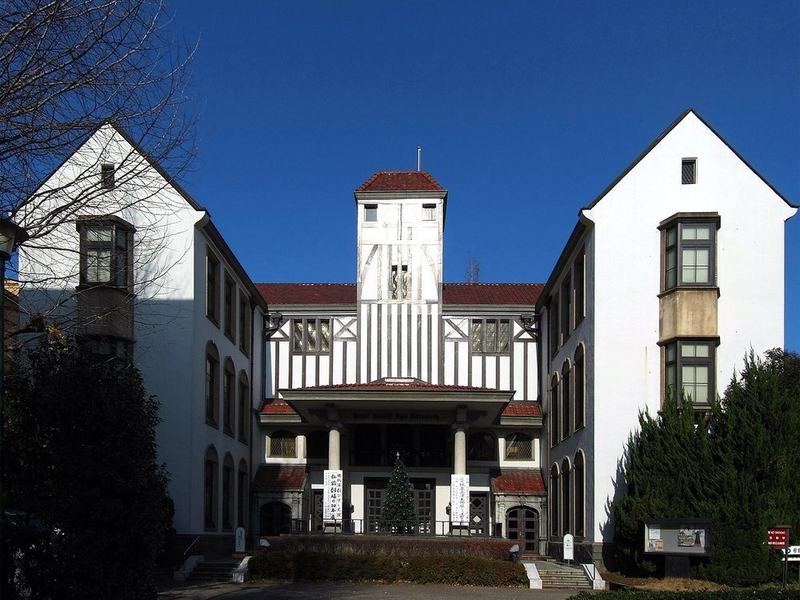
Waseda University Theatre Museum
早稲田大学演劇博物館(エンパク) · Waseda University Theatre Museum
- Ward
- Shinjuku
- Price
- Free
- Hours
- 10:00–17:00 (to 19:00 Tue & Fr
- Closed
- Irregular — check the official opening calendar
- Getting there
- 7 min from Waseda Station (Tokyo Metro Tozai), 5 min from Waseda tram stop
- Founded
- 1928
- Exhibits close from August 2026
- The building is a copy of a Elizabethan playhouse
- Only Tuesdays and Fridays run to seven
We do not republish copyrighted photographs. Use the links below to see the actual venue.
Obvious to locals, invisible to visitors
There is a simple reason guidebooks leave this out: to the people who live here it is too obvious to be worth explaining.
The museum's own notice says exhibits will be suspended from 3 August 2026 until around March 2027 for refurbishment ahead of its 2028 centenary; library access changes too. During that window, plan on seeing the exterior and forecourt only.
Tsubouchi Shoyo proposed it and Imai Kenji designed it after the Fortune Playhouse of Elizabethan London. The projecting front is the stage, with entrances either side; the reading room is the tiring house, the wings are the galleries, the forecourt is the yard. The whole building is a theatre plan.
Standard hours are ten to five, but Tuesday and Friday run until seven — the only two days you can come after work. Closing days are irregular and differ month to month, so check the calendar on the official site. Being inside a university, the academic timetable moves things too.
What it is
Opened in 1928, the only comprehensive museum in Asia devoted to theatre and film. It was built to mark Tsubouchi Shoyo's completion of a forty-volume translation of Shakespeare. The collection runs past a million items and admission is free. The building itself copies the Fortune Playhouse of sixteenth-century London, so the structure is an exhibit in its own right.
What to order
Why locals keep coming
The projecting front is the stage, with the entrances to either side. The reading room stands in for the tiring house, the flanking wings for the galleries, and the forecourt for the yard. A refurbishment is planned ahead of the museum's centenary in 2028, so check the opening information before you go.