Shinagawa Fuji
品川富士(品川神社 富士塚) · Shinagawa Fuji
- Ward
- Shinagawa
- Price
- Free
- Hours
- Open for climbing at any time
- Closed
- None (avoid in bad weather)
- Getting there
- 1 min from the north exit of Shimbamba Station (Keikyu)
- Founded
- 1869
- From the sixth station it turns steep — take the chain
- This mountain had its eastern flank cut off
- Climb to the shrine first, then the mound
We do not republish copyrighted photographs. Use the links below to see the actual venue.
Obvious to locals, invisible to visitors
There is a simple reason guidebooks leave this out: to the people who live here it is too obvious to be worth explaining.
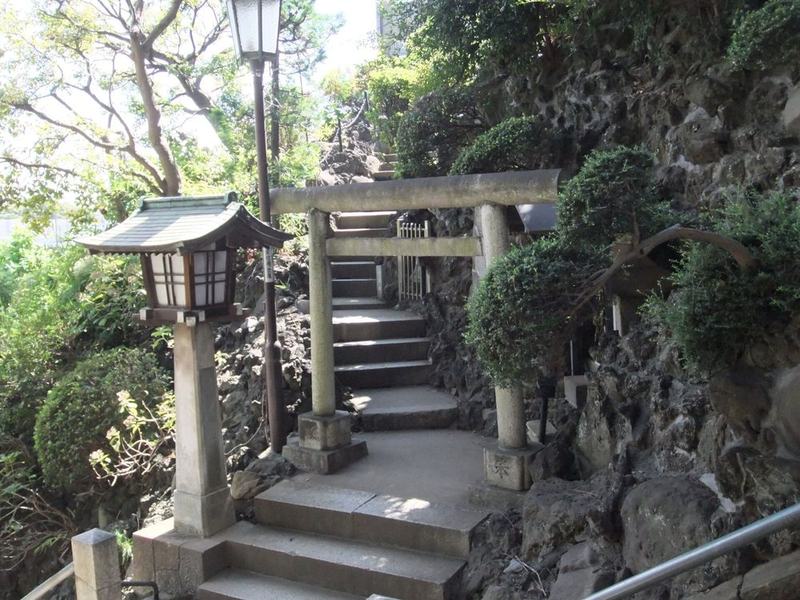
Steps run up from the torii, but partway the slope sharpens and a chain appears to hold. It is barely five minutes to the top, yet people in smooth-soled shoes stop here. After rain the lava surface is slick — better to leave it for another day.
What you see is not the original shape. The Daiichi-Keihin highway took away the eastern side in the early twentieth century, and from the road you can see where the hill has been cut unnaturally flat. It had already been raised in 1869, destroyed under the separation of Shinto and Buddhism, and rebuilt in 1872.
The shrine sits on high ground, so you take the main stone steps first. The entrance to the mound is separate, off to the left of those steps. First-timers walk straight past it to the main hall and have to come back. Spot the left-hand torii on the way in and you save the trip.
What it is
The tallest fujizuka in Tokyo — about fifteen metres high and a hundred round. Some three hundred members of the Shinagawa Marukako confraternity raised it in 1869; when it was pulled down under the policy separating Shinto from Buddhism, they rebuilt it in 1872. The eastern flank was cut away when the Daiichi-Keihin highway went through in the early twentieth century. It is a Shinagawa Ward designated folk cultural property.
What to order
Why locals keep coming
Counted among the Edo Seven Fuji raised by Fuji confraternities. The slope is faced with lava carried from the real mountain, and stone markers run from the first station to the ninth. The Marukako confraternity holds the mountain-opening rite in early July each year.