Nihao Honten
中国家庭料理 你好 本店 · Nihao Honten
- Ward
- Ota
- Price
- ¥1,000~2,000
- Hours
- weekdays 11:30-14:00 / 17:00-2
- Closed
- irregular
- Getting there
- 3 min walk from Keikyu Kamata Stn, 10 min from JR Kamata Stn
- Founded
- 1983
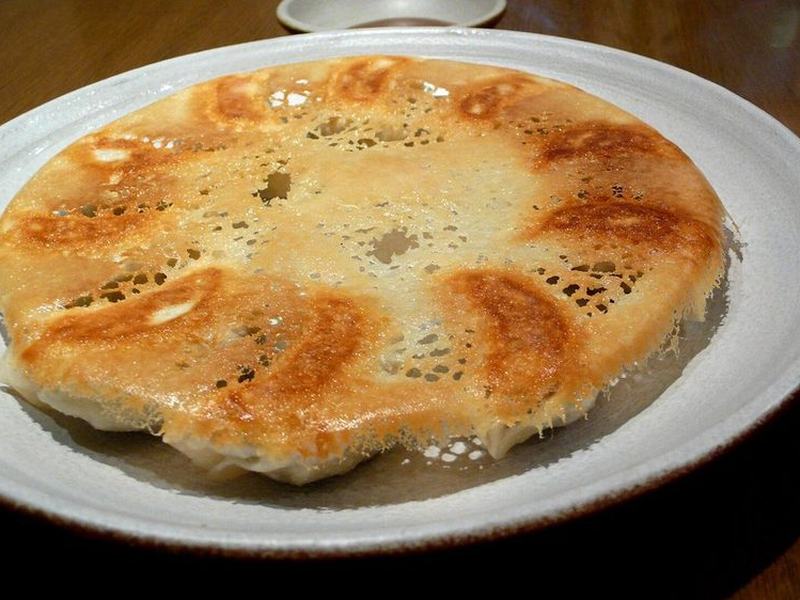
- Founded in 1983, this is held to be the birthplace of the winged gyoza
- Gyoza suggests garlic, but this lineage uses none
- Here the winged gyoza is written as 'guotie'
We do not republish copyrighted photographs. Use the links below to see the actual venue.
Obvious to locals, invisible to visitors
There is a simple reason guidebooks leave this out: to the people who live here it is too obvious to be worth explaining.
Founded in 1983, this is held to be the birthplace of the winged gyoza. Its founder adapted the idea from a winged grilled bun he knew from Dalian in China. And the other two shops of Kamata's so-called 'big three' belong to his younger brother and younger sister — not rivals but branches of one family. Knowing that changes what a three-shop crawl means.
Gyoza suggests garlic, but this lineage uses none — the reasoning being that garlic buries the taste of the dumpling itself. The filling is simple, pork with cabbage and spring onion, and the thick wrapper eats like a boiled dumpling that has been fried. It also means you can eat them at lunch without worrying about your breath.
Here the winged gyoza is written as 'guotie'. Some shops just call it yaki-gyoza, which confuses people, but they are the same thing. The three shops have long kept the price of these grilled dumplings at a similar level. The main shop is small, so if the queue is long, the annex a few minutes' walk away has far more seating.
What it is
Ota is a ward of factories, Haneda and working-class shotengai. The sign has faded and the doorway is narrow — yet at lunchtime people file through it without a break. Seasonal items go up separately on the wall. They are day-only, so grab one if you see it. Hours go irregular over long holidays; check before setting out. Map apps drift in the narrow lanes; for the last hundred metres, look for the sign instead. If you return, come at a different hour — the impression changes considerably.
What to order
Why locals keep coming
The layout suits solo diners: mostly counter seats, and nobody encourages you to linger. Most customers live within walking distance. Disappoint them once and they never return — which keeps the floor high.