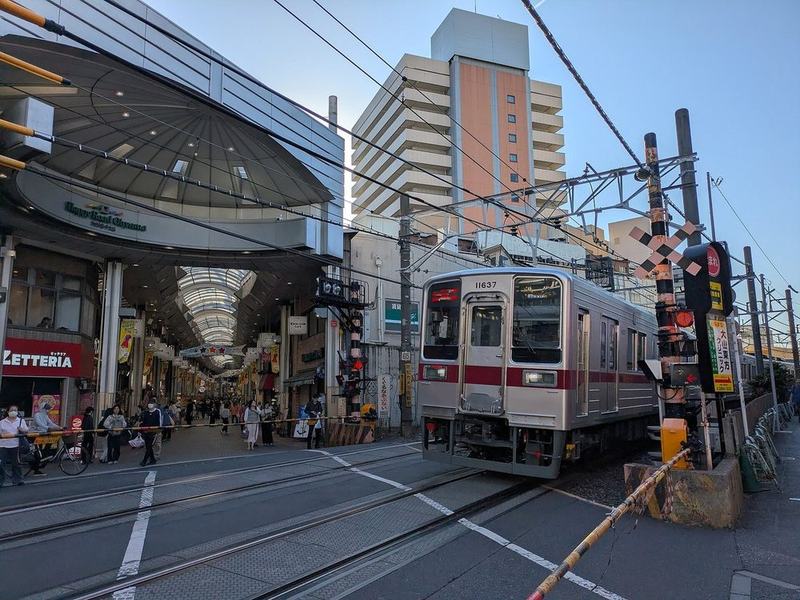
Happy Road Oyama
ハッピーロード大山商店街 · Happy Road Oyama
- Ward
- Itabashi
- Price
- Free (shopping ¥300~)
- Hours
- varies by shop / 13:00-21:00 p
- Closed
- Varies by shop
- Getting there
- 10 min walk from Tobu Tojo Line Oyama Stn south exit direct / Toei Mita Line Itabashi-kuyakusho-mae Stn
- Founded
- 1978
- The arcade runs about 560 metres from the station exit
- Under a road scheme, part of the arcade began coming down in 2024, with redevelopment
- One shop is run directly by the street's own trade association
We do not republish copyrighted photographs. Use the links below to see the actual venue.
Obvious to locals, invisible to visitors
There is a simple reason guidebooks leave this out: to the people who live here it is too obvious to be worth explaining.
The arcade runs about 560 metres from the station exit, so you can walk the whole length without an umbrella. More than two hundred shops line it, and from 1pm to 9pm daily vehicles are barred and it becomes a pedestrian street. Few places in Tokyo suit a rainy afternoon better.
Under a road scheme, part of the arcade began coming down in 2024, with redevelopment around the station running in parallel. A new high-rise already interrupts the middle of the street, and some shops carry closing or relocation notices. Opinion is divided locally enough that there have been protests. What you see now may not be here in a few years.
One shop is run directly by the street's own trade association, contracting with municipalities across Japan to bring in their vegetables and regional goods. It is a way of buying the provinces while in Tokyo — built for residents, not visitors. Japanese confectioners are unusually numerous here too, and there are shops frozen in time, like a stationer you reach by climbing to a first floor.
What it is
Itabashi is a ward of the Nakasendo post town and local shotengai. The menu is a few handwritten sheets on the wall. Few choices means only the confident ones survived. Sides are often refillable, but it is polite to ask first. Around two in the afternoon, once the lunch peak has passed, is the quietest window. Keep the receipt — it makes the name easy to look up later, since many signs are kanji-only. The more times someone has been to Tokyo, the longer they tend to stay in places like this.
What to order
Why locals keep coming
Most customers live within walking distance. Disappoint them once and they never return — which keeps the floor high. Turnover is fast — food arrives quickly and twenty minutes is enough from sitting to standing.