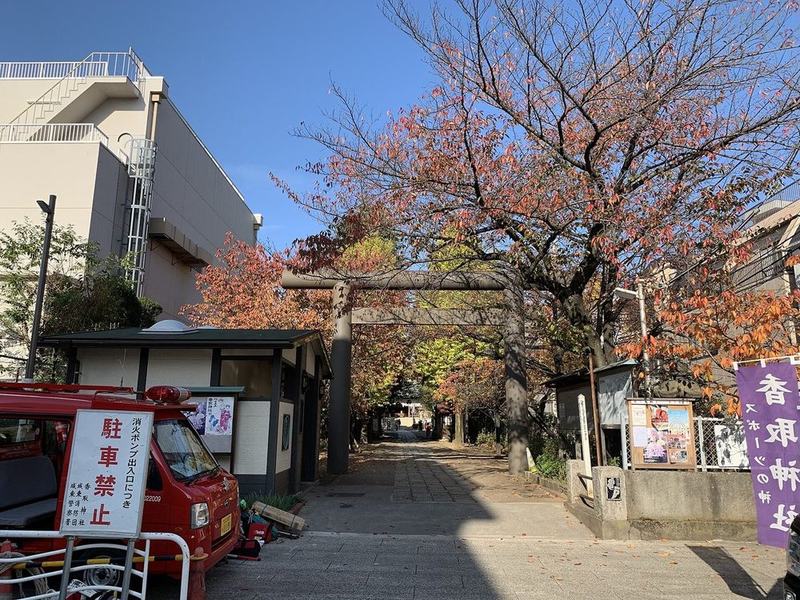
Katori Shrine (Komatsuna)
小松菜ゆかりの里 香取神社 · Katori Shrine (Komatsuna)
- Ward
- Edogawa
- Price
- Free
- Hours
- Grounds always open; office in
- Closed
- Open daily
- Getting there
- 15 min walk from JR Sobu Line Shin-koiwa Stn
- Founded
- 1719
- Komatsuna, a green found on tables all over Japan, was once a vegetable with no name
- The shrine where the naming happened still holds a stone marker recording the story
- This is not merely where the story happened
We do not republish copyrighted photographs. Use the links below to see the actual venue.
Obvious to locals, invisible to visitors
There is a simple reason guidebooks leave this out: to the people who live here it is too obvious to be worth explaining.
Komatsuna, a green found on tables all over Japan, was once a vegetable with no name. In 1719 the eighth shogun stopped here while hawking, and the shrine's priest hurriedly served a clear soup with rice cake, garnished with the local greens. The shogun liked it, asked what the greens were called, and on hearing they had no name, ordered that they be named after this village. A place name became a vegetable.
The shrine where the naming happened still holds a stone marker recording the story, and enshrines the tutelary deity of the vegetable. It is not a groomed attraction but an ordinary shrine in a residential district — miss the sign and you walk straight past. Visiting is free and unrestricted. It is a rare case of being able to stand at the actual origin point of something people eat.
This is not merely where the story happened: the ward still produces around forty percent of all the crop grown in Tokyo. Winter is the season, and frost drives sugar into the leaves and sweetens them. The custom of putting this green in New Year soup across the Kanto region spread from here. The greens floating in your soup at a Tokyo set-meal shop in winter are very likely these.
What it is
Edogawa is a ward of wide rivers and open floodplains. Walk on and the line between public path and someone's daily life blurs. That blur is the character of the place. You will walk farther than expected — wear something comfortable. Weekday mornings are calmest; expect to queue at weekend lunch. There are a few similar places nearby — do not give up if the first one is full. It would be a waste to stop at just this one — there is more of the same density within five hundred metres.
What to order
Why locals keep coming
It is barely hashtagged. Being a view not yet consumed is itself the value. Few people about, so no other tourists end up in your frame.