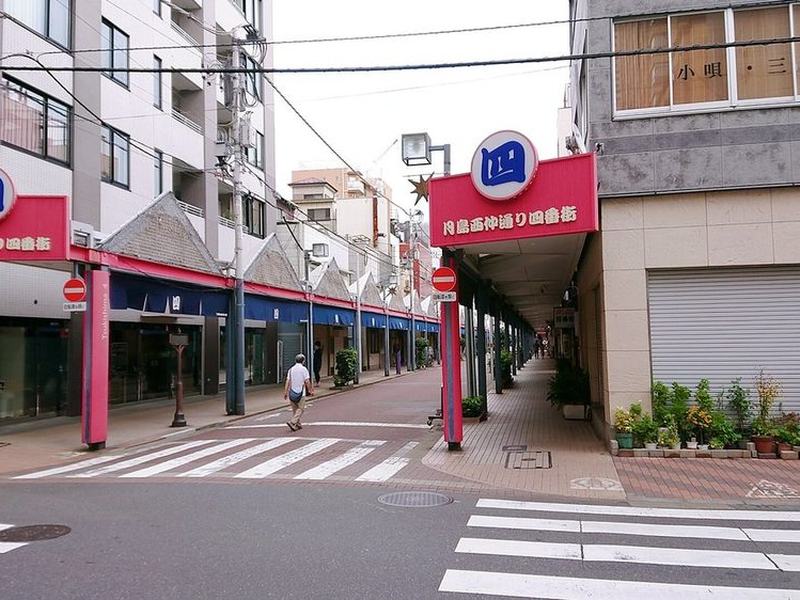
Tsukishima Monja Street
月島もんじゃストリート · Tsukishima Monja Street
- Ward
- Chuo
- Price
- ¥1,200~2,500
- Hours
- varies by shop (typically 11:3
- Closed
- varies by shop
- Getting there
- Tsukishima Stn 7exit right outside · Oedo Line/Yurakucho Line
- Founded
- 1955
- You do not pour it all at once
- Press the thinned batter onto the iron with the small spatula and let it scorch
- Everyone gets their own small spatula and eats straight off the griddle
We do not republish copyrighted photographs. Use the links below to see the actual venue.
Obvious to locals, invisible to visitors
There is a simple reason guidebooks leave this out: to the people who live here it is too obvious to be worth explaining.
You do not pour it all at once. Fry the solids first, gather them into a doughnut-shaped dyke, ladle the liquid into the middle a little at a time, then mix and spread once it bubbles. Skip the order and the dyke collapses across the whole griddle.
Press the thinned batter onto the iron with the small spatula and let it scorch — the crust is the whole point. Hold the spatula almost flat to the griddle for an even one, and wait rather than rush.
Everyone gets their own small spatula and eats straight off the griddle — this is not a dish you portion onto plates. Several people scraping the same iron is the form it takes.
In the postwar years, when paper and brushes were scarce, adults wrote characters on the griddle with thin batter to teach children. 'Moji-yaki' — letter-frying — slurred into monja. It began as a sweet-shop snack for kids.
What it is
Chuo is a ward where Edo merchant culture lingers. The sign has faded and the doorway is narrow — yet at lunchtime people file through it without a break. First time? Order the top item. It is usually what the kitchen has been making longest. Arrive at opening and seating is no issue — though turnover is brisk, so lingering is hard. Seats are tight and coats end up on your lap — layering thin works better in winter. If you return, come at a different hour — the impression changes considerably.
What to order
Why locals keep coming
Most customers live within walking distance. Disappoint them once and they never return — which keeps the floor high. Turnover is fast — food arrives quickly and twenty minutes is enough from sitting to standing.